
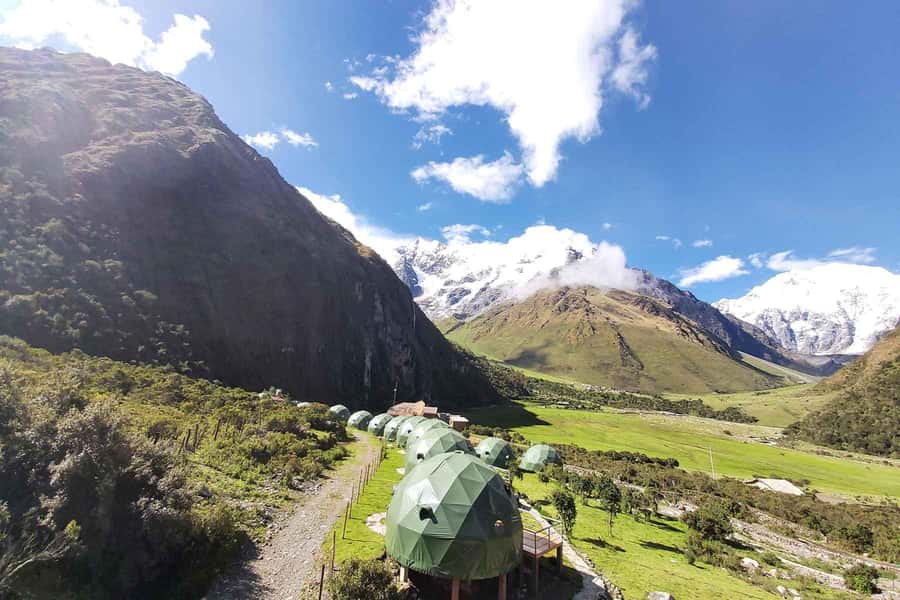
REVIEW · MACHU PICCHU TOURS & TICKETS
Salkantay Trek to Machu Picchu 5 Days with Sky Lodge Domes
Salkantay is the Andes at full volume. You get hard views, ancient footpaths, and that classic turquoise Humantay Lake moment, all wrapped in a trek plan that still feels comfortable at night.
I like two things a lot here: the Sky Lodge Domes setup (private bathroom and hot shower) and the strong emphasis on food and guiding. In a small group capped at 8, guides like Fernando and Nildo can stay attentive, and the chef work (Armando comes up in feedback) is a big part of why people feel good after long walking days.
One drawback to keep in mind: the domes and camp experience are luxury-leaning, but comfort can vary by night. One past guest noted the second night felt more basic than advertised, so expect the overall style to be premium, but not every stop will feel identical.
In This Review
- Key reasons this Salkantay trek stands out
- Salkantay’s route: why this trek feels more like a journey than a hike
- Sky Lodge Domes: what you gain (and what to expect each night)
- Day 1: Challacancha start, Humantay Lake, and your first dome night
- Day 2: Salkantay Pass challenge and the value of oxygen + backup options
- Day 3: Santa Teresa Valley, easier walking, and optional hot springs
- Day 4: part of the Inca Trail, Llactapata views, and Aguas Calientes choice
- Day 5: guided Machu Picchu, optional hikes, then train back to Cusco
- Food and chef-camp setup: the comfort engine for a 5-day trek
- Transport, horses, and the 7-kilo luggage limit
- Price and value: does $680 match what you’re actually buying?
- What to pack for Salkantay’s cold mornings and weather swings
- Who should choose this trek, and who should skip it
- Should you book this Salkantay to Machu Picchu trek with Sky Lodge Domes?
- FAQ
- What happens the night before the trek starts?
- Where does the trek begin on Day 1?
- How is luggage handled during the trek?
- What meals are included?
- Are sleeping bags and trekking poles included?
- Is safety support included for altitude and emergencies?
Key reasons this Salkantay trek stands out
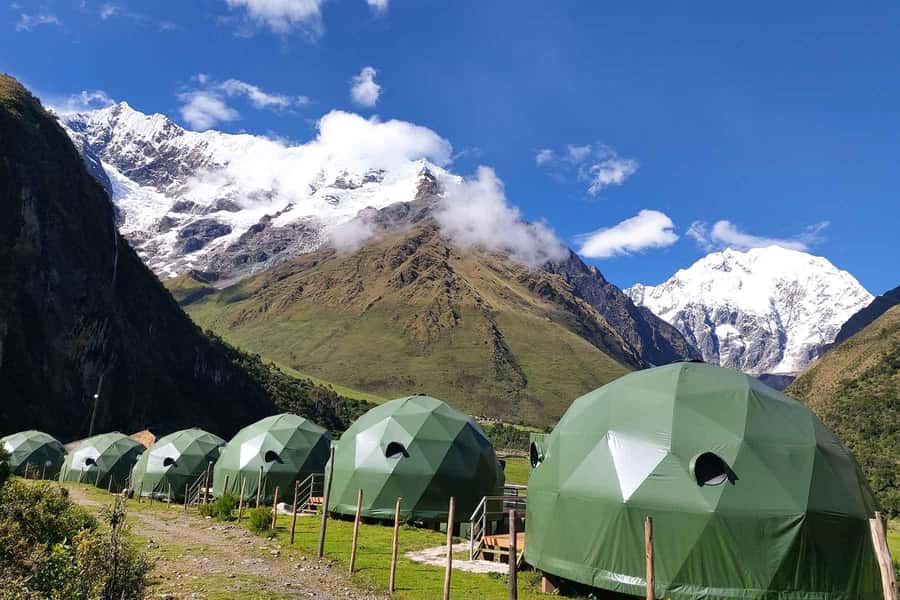
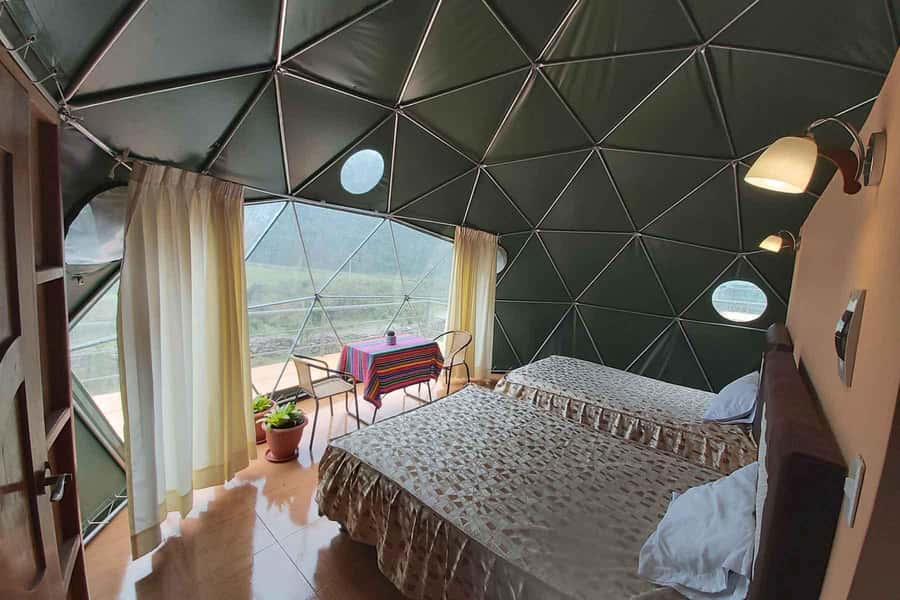
- Luxury domes with real comfort: private bathroom and hot shower make a big difference when you’re tired and cold.
- Humantay Lake plus Inca paths: glacier-lake scenery and sections of Inca route add depth beyond the views alone.
- Guides who manage the details: Fernando-style briefing and guidance help you make smart choices for Machu Picchu day.
- Food that keeps you moving: multiple breakfasts, lunches, dinners, plus snacks at camp.
- Altitude support is built in: an oxygen tank and practical options if conditions get tough.
Other ways up to Machu Picchu, reviewed
- From Aguas Calientes: Machu Picchu guided tour with tickets★ 4.9 · 72 reviews
- From Cusco: Machu Picchu 2 days★ 3.6 · 29 reviews
- Cusco: Machu Picchu Day Trip with Train + Entrance ticket★ 4.5 · 17 reviews
- Rainbow Mountain tour and Machu Picchu tour by train★ 4.8 · 13 reviews
Salkantay’s route: why this trek feels more like a journey than a hike
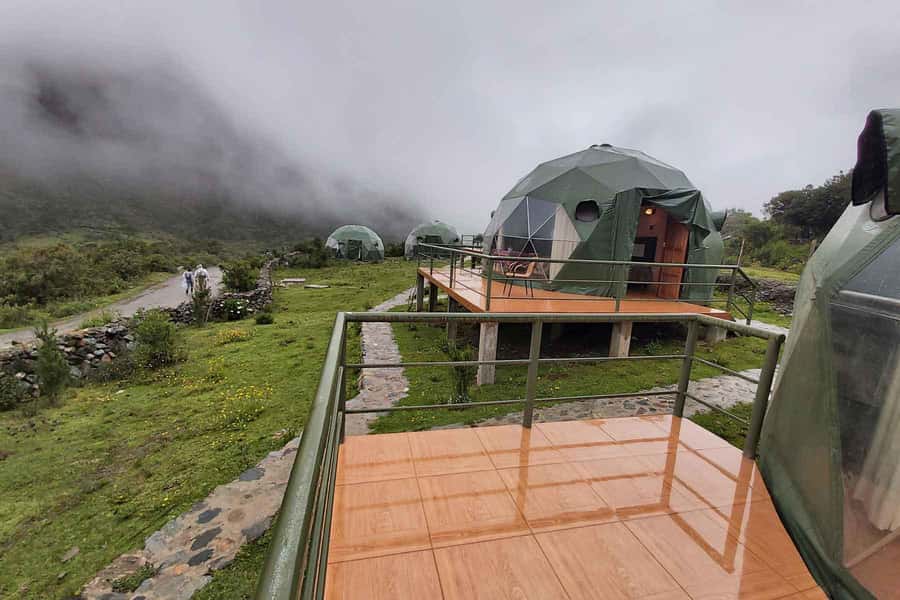
The Salkantay trek earns its reputation for a reason. You’re walking through high Andean passes, valleys, and side-trails that many travelers only see from a bus window. Along the way, you’re not just ticking off scenery—you’re moving through places tied to older routes, including time on ancient Inca pathways.
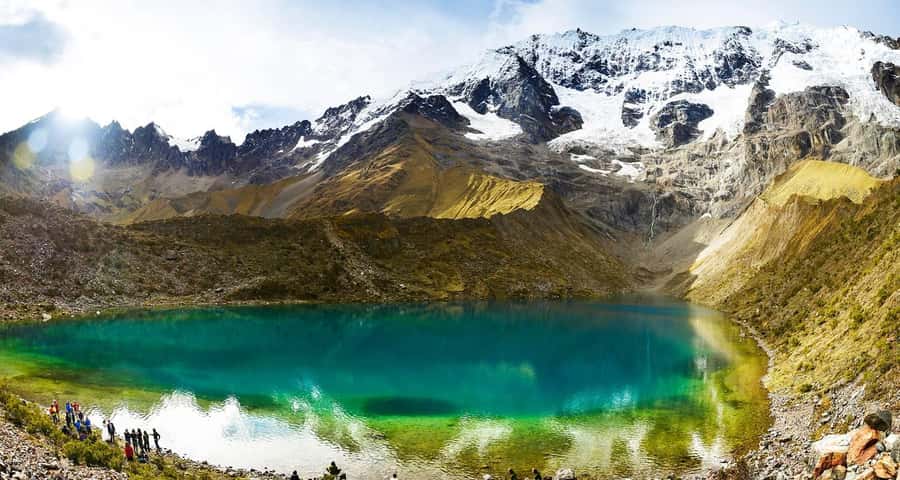
The itinerary also gives you contrast. Day 1 points you toward Humantay Lake, a turquoise glacial lake framed by snow-peaked mountains. Then the trek tightens toward Day 2’s big moment: the Salkantay Pass. That mix of “wow” landscapes and real physical challenge is the core of why people feel satisfied at the end.
And because this is a small group (up to 8), it’s easier to keep a steady pace and ask questions when altitude, weather, or timing gets tricky.
Sky Lodge Domes: what you gain (and what to expect each night)
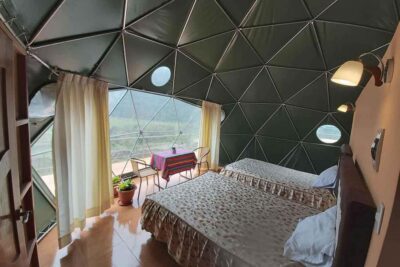
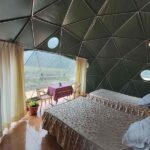
Night one is a dome experience built for comfort after a walking day. You sleep at Soraypampa in a Sky Lodge Dome with a private bathroom and hot shower. After an evening under the stars, you’re not stuck with basic tent life and cold water when you’re exhausted.
Day 2 and Day 3 also include dome nights, with a second stay in the domes after the descent to Chaullay and another after the Santa Teresa Valley portion. The dome model matters because it changes how you recover between days. Your body gets the chance to warm up, rinse off sweat, and sleep without feeling trapped in gear.
Still, one review note is worth taking seriously: the second night didn’t fully match the comfort level expected. That doesn’t mean the whole trip is inconsistent, but it does mean you should expect “luxury style” overall, not identical finishes every single night.
Day 1: Challacancha start, Humantay Lake, and your first dome night
Your trek starts with an early Cusco pickup and transportation out toward the trailhead, including breakfast in Mollepata. Then you transfer to Challacancha, where Day 1 begins.
From there, the walking day builds a rhythm: you hike toward Soraypampa for your dome night, then you get a hike to Humantay Lake. The lake stop is the big visual payoff of the day—turquoise water against snowy peaks—and it’s also one of those places where your photos can’t quite show how crisp and cold the air feels at altitude.
The evening is part of the package. After dinner, you’ll have a dome base to wind down, and the timing is set so you can enjoy the night sky. This is the kind of first day that sets expectations: yes, it’s trekking, but you still get a “reward” moment that feels designed, not random.
Day 2: Salkantay Pass challenge and the value of oxygen + backup options
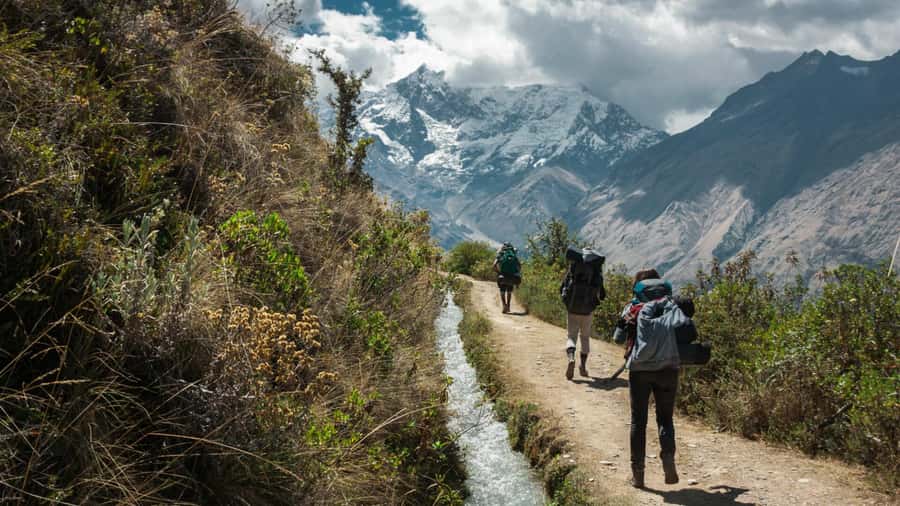
Day 2 is the hardest day in the classic sense: an early start, a hike up to the Salkantay Pass, and then a descent to Chaullay for the next night.
This is where altitude becomes real for most people. The plan includes an oxygen tank in the trek kit and a first aid kit, which is a comfort for anyone who’s nervous about what to do if they start feeling off. You’ll also be walking high, with views of Andean peaks that make the effort feel worth it.
One practical thing to know: there can be an option to ride a horse for the toughest moments, and that’s typically for an extra cost. It’s not the same as changing the whole route, but it’s a useful safety valve if the pass hits harder than you expected.
When you’re choosing trekking shoes and pace, Day 2 is the reason to pack for cold and rain and take it slow early. Saving energy now makes the downhill feel less like a knee test.
Other Salkantay routes to compare
Day 3: Santa Teresa Valley, easier walking, and optional hot springs
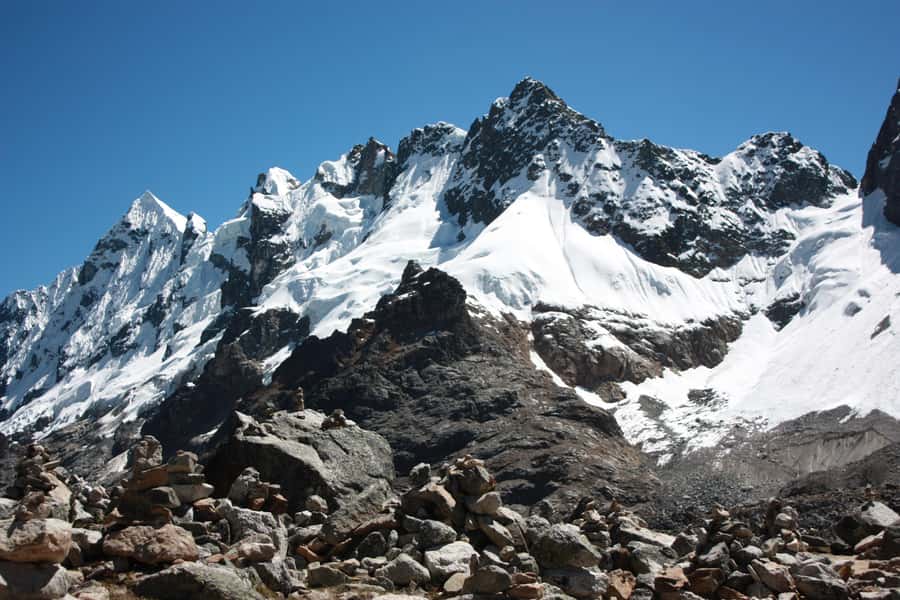
Day 3 shifts gear. The walking is described as easier than the pass day, and the route heads through the Santa Teresa Valley.
This is the day I’d frame as your recovery day. You still trek, but the focus becomes getting through the day comfortably and keeping your body ready for Day 4’s Inca-site time and Day 5’s Machu Picchu visit.
There’s also an optional hot springs stop. The idea is simple: soothe sore legs before Machu Picchu day. Because it’s optional, you can decide based on how you feel—perfect when altitude has drained you or when you’re aching and want to loosen up.
You finish Day 3 with another dome night. It’s a good setup: easier day, then warm shower, then sleep.
Day 4: part of the Inca Trail, Llactapata views, and Aguas Calientes choice
Day 4 is where the trek connects more directly to Machu Picchu beyond the final bus ride.
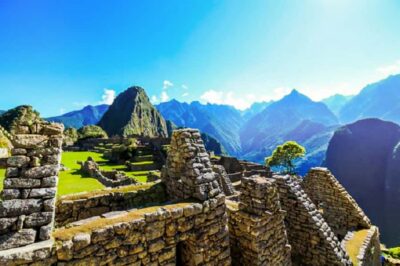
You’ll pass through part of the Original Inca Trail route and then visit the Llactapata Inca site. Llactapata is known for views over Machu Picchu, and this is a smart placement in the itinerary. It turns the destination into something you can see and anticipate, instead of just arriving by morning and trying to understand it on the spot.
After Llactapata, you’ll head to Aguas Calientes for the hotel night. The plan gives you a choice: you can hike some of the final approach or take the train. This flexibility is a real quality-of-life detail. If your legs are great, hiking adds effort and satisfaction. If not, the train reduces strain so you can enjoy the next day.
Day 5: guided Machu Picchu, optional hikes, then train back to Cusco
Your Machu Picchu day starts with a bus ride to the site, followed by a guided tour. This matters because Machu Picchu isn’t just a photo spot—it’s a place where layout, terraces, and viewpoints become clearer with a guide.
There are also options for additional hikes depending on what you’re up for. After the guided time on site, the itinerary finishes with a train ride to Ollantaytambo, then a transfer back to Cusco.
This is a smooth end for a trek that starts high and ends by the ruins. You don’t spend hours navigating yourself when you’re tired; the transport is handled, and the schedule keeps you moving toward Cusco without dragging the trip into a second travel day.
Food and chef-camp setup: the comfort engine for a 5-day trek
Food is included in a way that makes the trek feel more livable. You get 4 breakfasts, 4 lunches, 4 dinners, plus 3 snacks across the route. The chef/cook is part of the included plan, and dining gear includes portable chairs and tables.
In practice, that means you’re not eating only packaged snacks on the hardest day. Meals become a planning tool: carbs when you need them, and hot meals at camp so you’re not trying to “tough it out” on cold energy.
Past feedback highlights how satisfying the cooking is, with traditional, fresh meals made during the trek. After long hours of walking, this is one of the highest-impact inclusions—because it affects how you walk tomorrow, not just how you feel tonight.
Transport, horses, and the 7-kilo luggage limit
One of the best practical details here is that you don’t carry everything. Horsemen and mules transport equipment, food, and personal luggage (up to 7 kilos per person). You also get a duffel bag, which helps you keep your packing organized and easy for the team to move.
What you carry is then mostly your daypack. That’s important for knee comfort on steep descents. If you’ve ever carried too much on a mountain trail, you know the difference between “manageable weight” and “why did I do this” weight.
This trek setup is also why packing smart matters. Bring warm layers, rain gear, and essentials, but don’t overpack “just in case.” With a strict luggage system, extra stuff becomes dead weight.
Price and value: does $680 match what you’re actually buying?
At $680 per person for 5 days, you’re not just paying for distance. You’re paying for a lot of logistics and inclusions that normally add up.
The value case looks strong if you care about:
- Machu Picchu entrance fee and a guided tour on the final day
- transport from Cusco to the trailhead and back via Ollantaytambo
- hotel night in Aguas Calientes
- multi-day camp meals and a professional cook
- luxury dome nights with private bathroom and hot shower
- the safety add-ons like the first aid kit and oxygen tank
If your priority is the lowest cost possible, you can find cheaper treks elsewhere. But if your goal is a high-quality trek where comfort doesn’t collapse the minute you’re done hiking, this package is priced in a way that makes sense.
What to pack for Salkantay’s cold mornings and weather swings
Bring layers. Altitude means cold mornings, and Andean weather can change fast. Use this as your checklist:
- passport
- warm clothing
- sunglasses and sun hat
- hiking shoes
- sunscreen
- rain gear
- daypack and hiking pants
A few practical packing thoughts:
- Pack rain gear even if the sky looks calm in Cusco.
- Wear hiking shoes that already feel broken in.
- Bring a hat you can keep on during wind on the pass.
Also, sleeping bag and trekking poles aren’t included, but you can rent them from the operator. If you run hot, you still want a sleeping system that’s warm enough for cold nights.
Who should choose this trek, and who should skip it
This trek is best for people who want an active mountain challenge with real camp comfort. The small-group size helps if you prefer a guided pace over a chaotic herd.
It’s also for travelers who want a blend of physical effort and multiple “anchor moments”: Humantay Lake, the Salkantay Pass viewpoints, Llactapata views over Machu Picchu, and a guided ruin day.
That said, it’s not suitable for everyone. The trek is not recommended for pregnant women, people with back problems, or people with heart problems. If you’re unsure, take it seriously and talk to a clinician before committing—altitude and long walking days are part of the deal.
Should you book this Salkantay to Machu Picchu trek with Sky Lodge Domes?
I’d book it if you want:
- a small-group trek through classic Salkantay terrain
- dome nights with private bathroom and hot shower
- chef-led meals that make recovery easier
- guided Machu Picchu with time and support built in
I’d hesitate if:
- you’re very sensitive to altitude and want maximum certainty in lodge-level comfort every night (one past guest reported the second night felt more basic than expected)
- you need a fully accessible or low-impact plan (this trek has a hard pass and long walking days)
If you’re the type who likes your adventure with good structure, this is a solid bet. You’ll trade flexibility for a plan that handles transport, food, and the Machu Picchu day so you can focus on the trail and the views.
FAQ
What happens the night before the trek starts?
You get a briefing the night before at 6:00pm at your hotel in Cusco.
Where does the trek begin on Day 1?
You’re picked up from your hotel, transported to the trailhead, then transferred to Challacancha, where the trek begins.
How is luggage handled during the trek?
Horsemen and mules transport equipment, food, and personal luggage. Your personal luggage allowance is 7 kilos per person, and a duffel bag is provided.
What meals are included?
The tour includes food service in the campsites: 4 breakfasts, 4 lunches, 4 dinners, and 3 snacks. The first breakfast and the last dinner are not included.
Are sleeping bags and trekking poles included?
No. Sleeping bag and trekking poles can be rented from the operator.
Is safety support included for altitude and emergencies?
Yes. The package includes a first aid kit and 1 oxygen tank.
More Tour Reviews in Aguas Calientes
More Salkantay Departures
Machu Picchu, More Ways In
Recent write-ups from around Aguas Calientes, just off the trail
- Huchuy Qosqo Trek To Machu Picchu
★ 5.0 · 3 reviews - Guide in Machu Picchu
★ 5.0 · 3 reviews - “Glamping Sky Lodge Domes” 2-Day Humantay Lake & Salkantay
★ 5.0 · 3 reviews - From Cusco: Machu Picchu by Car 2D/1N
★ 3.5 · 3 reviews - TOUR TO MACHU PICCHU FULL DAY BY TRAIN – The Best Adventure
★ 3.2 · 4 reviews
Machu Picchu Tours & Tickets, compared.
 ★ 4.7From Cusco: Full-Day Group Tour of Machu PicchuFrom $3211,767 reviews
 ★ 4.5Machu Picchu Day Trip from CuscoFrom $3361,644 reviews
 ★ 4.6Machu Picchu: Full-Day Tour from Cusco with Optional LunchFrom $283927 reviews
 ★ 4.84-Day Inca Trail to Machu Picchu with AccommodationFrom $470432 reviews
 ★ 4.6From Cusco: 2-Day Trip to the Sacred Valley and Machu PicchuFrom $370265 reviews
 ★ 4.9Machu Picchu 2-Day Inca Trail with Panoramic TrainFrom $582260 reviews
 ★ 4.2From Cusco: 2-Day Inca Trail to Machu PicchuFrom $290244 reviews
 ★ 4.9Machu Picchu: Inca Trail 2-Day Overnight Guided TourFrom $585203 reviews
Browse the lists this tour appears in