
REVIEW · MACHU PICCHU TOURS & TICKETS
Inca Trail Machu Picchu 4 Days
Sunrise at Machu Picchu starts early. This is a 4-day Inca Trail route from Cusco through the Sacred Valley, built for an organized, small-group trek that ends with a guided visit to the citadel. You hike in stages, camp with full kitchen support, and roll into Machu Picchu with the classic Inti Punku first-view moment.
What I really like is the tight logistics: meeting at Km 82, organized document control, and transport that keeps you moving without guessing. Second, the human side stands out, from guides who keep the group together while still being flexible, to cooks serving serious trail food (yes, including a baked cake night). One more plus: you get camping equipment like tents, mats, dining setup, and even portable bathroom arrangements.
One consideration: this trek asks for real fitness. You’ll be climbing toward passes like Warmihuañusca (Death Pass) around 4200 m, and Day 2 is known for cold, hard walking, so you should train for big uphill days and altitude.
In This Review
- Key highlights I’d plan around
- Cusco to Km 82: the smooth start at 5:30 am
- Day 1 to Wayllabamba: Llactapata glimpses and an easier first rhythm
- Day 2: Death Pass at Warmihuañusca and the cold reality check
- Day 3 in Wiñayhuayna country: tunnels, baths, and the city above the clouds
- Inti Punku sunrise and Machu Picchu at about 8:00 am
- What your $905 pays for: trail access plus real infrastructure
- The team side: small-group attention you can feel
- Gear and fitness: what will make the trek feel manageable
- Who should book this Inca Trail to Machu Picchu
- Should you book this 4-day Inca Trail?
- FAQ
- How long is the Inca Trail experience?
- Where does the tour start, and what time is pickup?
- What is the group size limit?
- What’s included in the price for the trek?
- Do I need a sleeping bag?
- Is breakfast on the first day included?
- Can I cancel or change my booking?
Key highlights I’d plan around
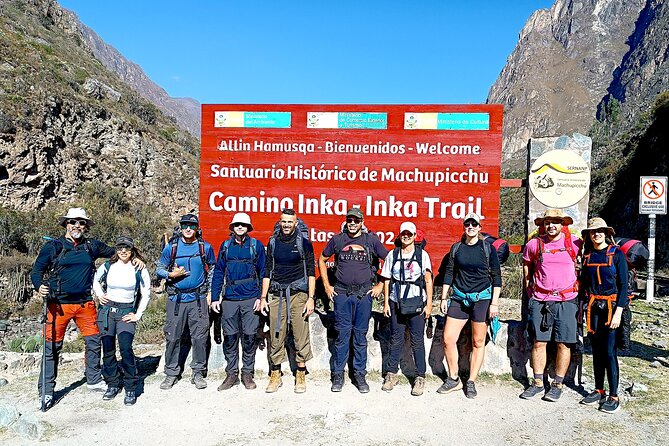
- Small group size (max 10) helps the pace feel controlled without feeling rushed.
- Camping equipment and food support mean you can focus on the hike, not hauling gear.
- Guided Machu Picchu visit at about 8:00 am gives you context before you explore on your own.
- Inti Punku first-view and sunrise is built into Day 4 for the classic wow factor.
- Oxygen and first aid are included, which is reassuring at altitude.
- Guides available in Portuguese or Spanish (on request) makes the whole story easier to follow.
Other ways up to Machu Picchu, reviewed
- Machu Picchu Private Archaeological and Historical Guided Tour★ 5.0 · 86 reviews
- Machu Picchu Private Tour from Aguas Calientes (Tickets included)★ 5.0 · 84 reviews
- 2-Day Inca Trail To Machu Picchu★ 5.0 · 78 reviews
- Machupicchu Guide Service★ 5.0 · 42 reviews
Cusco to Km 82: the smooth start at 5:30 am
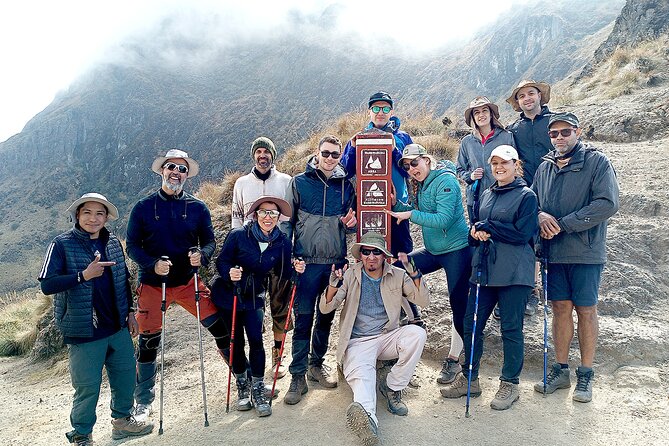
Day 1 begins early, with pickup from your Cusco hotel at 5:30 am. From there, you head toward the Sacred Valley, and before you even get to the Inca Trail start point you stop in Ollantaytambo for a brief break, with an option for breakfast.
The real start is Km 82, where you meet the group and present your documents for control and registration. That part matters more than it sounds. The Inca Trail is tightly managed, and getting this step right keeps your day on schedule.
Then you cross the Urubamba River (listed at 2200 m) and transition into the trail. The first day is described as easier to follow, which is exactly what you want after an early start. You’re not sprinting; you’re building rhythm.
Day 1 to Wayllabamba: Llactapata glimpses and an easier first rhythm
After that river crossing, Day 1 is set up to let you find your pace. You’ll hike toward Miskay, where you eat lunch in a riverbank setting. Your guide uses this time to explain what’s tied to the archaeological complex of Llactapata, so the trail stops feel purposeful instead of just scenic breaks.
From there, you continue up to Wayllabamba (around 3100 m), where you sleep. The Day 1 goal is simple: get your legs moving, learn a bit about what you’re walking through, and be ready for the bigger climbs coming on Day 2.
Practical note: this is the day where you can overpack for the hike because you think you’ll get used to it later. Don’t. Keep layers tight, and plan for changing conditions as altitude rises.
Day 2: Death Pass at Warmihuañusca and the cold reality check
Day 2 is the long one. Walking time is listed at about 9 hours, and it’s specifically called out as cold weather walking.
You start early and head toward the valley of Llulluchapampa (around 3850 m). The description focuses on rainforest feel and the sound of water, which is nice because it breaks the monotony of uphill-only thinking. After that, you follow the trail for a couple hours until you reach the highest point on this day.
Then comes the main event: Warmihuañusca (Death Pass) at about 4200 m. This climb is labeled as the most difficult part of the Inca Trail experience, so you should treat it like a pacing test, not a badge of honor. There’s a brief stop at the summit, then you continue with a long and steep descent/slope toward the Pacaymayu River and on toward the Runkurakay pass (around 3050 m).
You finish by reaching camp at Chaquicocha (around 3650 m). The reward here isn’t just the view—it’s the sense that you made it through the toughest day on the route. After that, you relax and take in the mountains.
Day 3 in Wiñayhuayna country: tunnels, baths, and the city above the clouds
Day 3 is often the surprise day. You’re still hiking, but the description emphasizes a shift in the ecosystem, with a move into the rainforest side and the Wiñayhuayna region. That change matters because it makes the trek feel less repetitive and more like you’re traveling through different versions of the Andes.
You start from Chaquicocha and head toward Llulluchapampa style high points again, but with a focus on passes and water. The route includes two small lakes at the top of the second pass (around 3950 m). From there, you do a gentle ascent through a small Inca tunnel, which gives a view over the Urubamba River into the Sacred Valley.
Next is the camp area: Phuyupatamarca, meaning the city above the clouds (around 3600 m). The name isn’t just poetic fluff. It’s described as a well-preserved place with a long chain of Inca baths, and that engineering detail is the kind of thing you’ll actually appreciate more after walking there rather than reading about it.
You pass another Inca tunnel, then visit the Wiñayhuayna complex, described as Forever young (around 2650 m). Then the day shifts again: descending the valley, you get your first views of the Machu Picchu mountain.
It’s a good day for snapping photos, yes. But more importantly, it sets you up mentally for the final push on Day 4.
More Inca Trail departures we have walked through
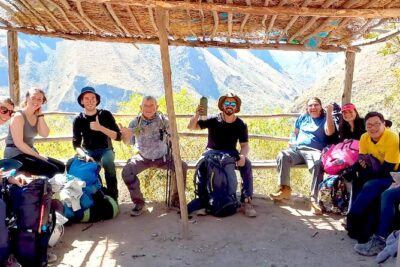
Inti Punku sunrise and Machu Picchu at about 8:00 am
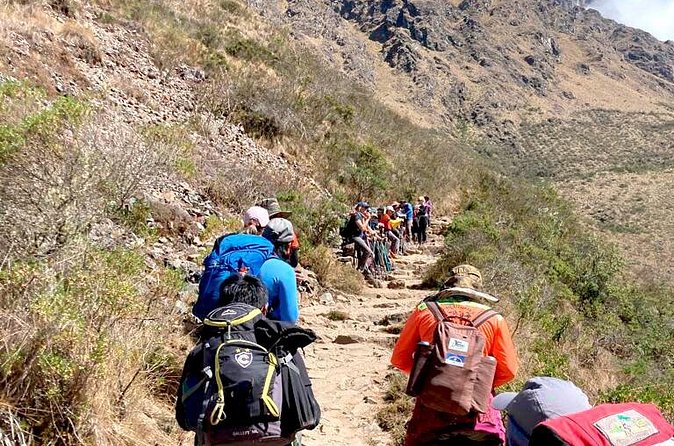
Day 4 starts with breakfast, then a hike toward Inti Punku, the Spanish name given here as La Puerta del Sol (Sun Gate). The point isn’t just distance; it’s timing. You’re doing the climb for the first big view of Machu Picchu and the sunrise over it.
The final slope takes almost an hour before you reach the citadel area around 8:00 am. You’ll get a guided tour of about two hours, designed to help you understand the meaning and ancient work of the archaeological park. After that, you’re not locked in. You’ll have enough free time to explore on your own.
Within that self-exploration window, you can go to the Inca Bridge, check out the variety of Inca monuments, and choose to climb Huayna Picchu for a panoramic image (the itinerary notes this as an option). Then you descend to Aguas Calientes for lunch.
Transport wraps the loop: you return by train to Ollantaytambo and Cusco. The plan includes a return train from Machu Picchu pueblo, depending on availability, and also mentions bus service from Machupicchu Villa to the archaeological site.
What your $905 pays for: trail access plus real infrastructure
At $905 per person, the question isn’t only whether it’s expensive. It’s whether it’s expensive for what you get. And here, the list of inclusions is long enough to matter.
You’re paying for:
- Entrance to the Inca Trail and Machu Picchu
- Tourist transport Cusco to Km 82 and Machu Picchu area back toward Cusco (via Ollantaytambo)
- A professional guide in Portuguese or Spanish (on request)
- Camping equipment: tents, mats, dining room, tables/chairs, and bathroom setup
- A cook and kitchen equipment, plus your food on the trail (breakfasts, lunches, dinners, and snacks)
- Oxygen and first aid
- Return train from Machu Picchu pueblo to Ollantaytambo, depending on availability
The biggest value here is simple: you’re buying time and energy back. Porters and staff handle the tent setup and kitchen logistics, so you don’t show up to the Andes as a moving warehouse. That also helps you keep a steady pace, which matters once you hit Death Pass.
Two things that are not included are also worth planning for:
- Sleeping bag (you’ll need your own)
- Breakfast on the first day and lunch options later (at Machu Picchu site or Aguas Calientes-Machupicchu village are listed as not included)
If you’re comparing against DIY planning, the included infrastructure is the difference between a tough dream and a managed trek.
The team side: small-group attention you can feel
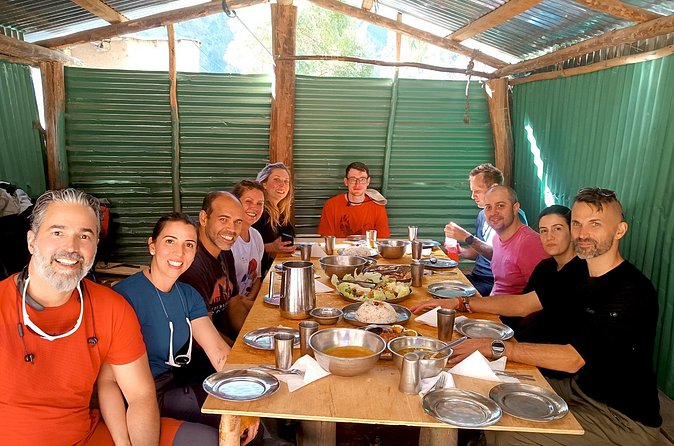
This tour caps at maximum 10 travelers, and that changes the feel. Smaller groups get less “herd management” energy and more real coaching time. The support team also matters because you’re living outside for multiple nights.
From the provided details, the setup includes:
- Camping tents plus dining space
- Food carried by staff
- Kitchen support so meals are actually cooked
- Ongoing support with oxygen and first aid on the trail
In the feedback data, I see a consistent theme: guides like Franklin are described as attentive and flexible, and cooks can get creative with special touches like baking a cake on one of the nights. Another mentioned guide is Giuliana, also described positively for energy and readiness.
Even with a small group, expect some schedule tension on Day 4 because you’re syncing your descent with train and bus timing. One note in the provided reviews mentions having to run to reach transport. That doesn’t mean it’s chaos every time, but it does mean you should be ready to move fast when the itinerary says so.
Gear and fitness: what will make the trek feel manageable
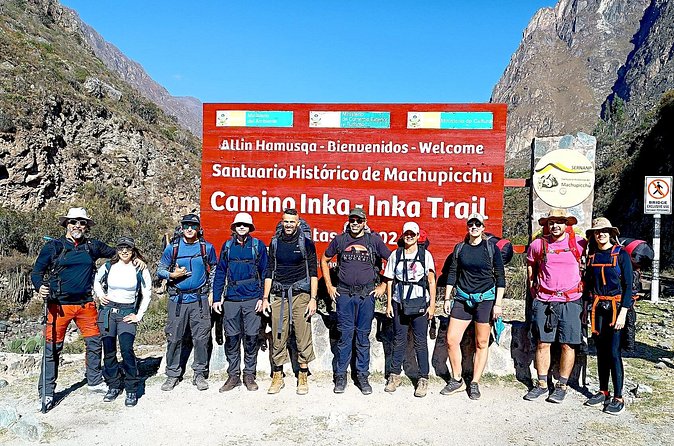
The data is clear: travelers should have strong physical fitness. Day 2 is described as the toughest, and walking time is long. Also, Day 2 is explicitly called cold weather walking, which is different from just chilly morning air.
Here’s what I’d treat as non-negotiable for comfort, based on the conditions described:
- Warm layers for cold mornings and nights (you’ll sleep at camps like Chaquicocha around 3650 m)
- A sleeping bag (not provided)
- Solid hiking shoes or boots that handle steep, rocky steps
- A rain layer, because the rainforest descriptions mean wet weather is part of the deal
- A pace plan for Warmihuañusca (Death Pass). You don’t win it by rushing.
Also, altitude. You’ll hit around 4200 m at Death Pass, and you’ll move through multiple high points across Day 1–3. The tour includes oxygen and first aid, but your real advantage is smart pacing. Slow breathing and steady steps beat short bursts.
Who should book this Inca Trail to Machu Picchu
This fits best if you:
- Want a guided, organized trek with camping and meals handled
- Like a structured route with clear milestones: Km 82, Death Pass, Wiñayhuayna, Inti Punku, and Machu Picchu
- Are comfortable with long hiking days and cold weather on higher parts of the trail
- Want Machu Picchu with context. The Day 4 guided tour helps you understand what you’re looking at before you wander
It may not be your match if you:
- Want a fully comfortable trip with minimal physical demand
- Hate early starts (Day 1 begins around 5:30 am)
- Are expecting a slow, casual hike with no demanding passes
One more booking reality: these tours are often booked about 60 days in advance on average, so waiting too long can shrink your options.
Should you book this 4-day Inca Trail?
If you’re trying to choose between a simple hike plan and a real, end-to-end Machu Picchu arrival, this is the kind of package that makes the experience feel possible. The reason is practical: everything key is built in—trail entry, guide support, camping infrastructure, food, and a sunrise approach at Inti Punku.
I’d book it if you’re ready for hard walking and you want your energy spent on the trail instead of logistics. I’d think twice if you’re not comfortable training for uphill days at altitude or you don’t want to carry your own sleeping bag.
If you go into it with the right mindset—steady pace, warm layers, and flexibility on Day 4 connections—you’ll end with the part everyone dreams about: Machu Picchu at first light, followed by a guided start and time to explore at your own rhythm.
FAQ
How long is the Inca Trail experience?
It’s listed as 4 days approximately (a 4-day trek with camps on three nights, ending with Machu Picchu on Day 4).
Where does the tour start, and what time is pickup?
The meeting point is Cusco, Peru, and the Day 1 start includes pickup from your hotel at 5:30 am.
What is the group size limit?
The tour has a maximum of 10 travelers.
What’s included in the price for the trek?
Inclusions include Inca Trail and Machu Picchu entrance, tourist transport (Cusco to Km 82 and Machu Picchu area back toward Cusco), a professional guide (Portuguese or Spanish on request), camping equipment, cook and kitchen support, food (breakfasts/lunches/dinners/snacks as specified), oxygen and first aid, and return train from Machu Picchu pueblo to Ollantaytambo depending on availability.
Do I need a sleeping bag?
Yes. A sleeping bag is not included.
Is breakfast on the first day included?
No. Breakfast on the first day is not included.
Can I cancel or change my booking?
The experience is non-refundable and cannot be changed for any reason.
More Tour Reviews in Sacred Valley
Still Set on the Inca Trail?
Machu Picchu, More Ways In
Recent write-ups from around Sacred Valley, just off the trail
- Inca Trail Machu Picchu 4 Days
★ 5.0 · 39 reviews - Private Tour Guide in Machupicchu from Aguas Calientes.
★ 5.0 · 40 reviews - Machupicchu Guide Service
★ 5.0 · 42 reviews - 2-Day Inca Trail To Machu Picchu
★ 5.0 · 78 reviews - Machu Picchu Private Tour from Aguas Calientes (Tickets included)
★ 5.0 · 84 reviews
Machu Picchu Tours & Tickets, compared.
 ★ 4.7From Cusco: Full-Day Group Tour of Machu PicchuFrom $3211,767 reviews
 ★ 4.5Machu Picchu Day Trip from CuscoFrom $3361,644 reviews
 ★ 4.6Machu Picchu: Full-Day Tour from Cusco with Optional LunchFrom $283927 reviews
 ★ 4.84-Day Inca Trail to Machu Picchu with AccommodationFrom $470432 reviews
 ★ 4.6From Cusco: 2-Day Trip to the Sacred Valley and Machu PicchuFrom $370265 reviews
 ★ 4.9Machu Picchu 2-Day Inca Trail with Panoramic TrainFrom $582260 reviews
 ★ 4.2From Cusco: 2-Day Inca Trail to Machu PicchuFrom $290244 reviews
 ★ 4.9Machu Picchu: Inca Trail 2-Day Overnight Guided TourFrom $585203 reviews
Browse the lists this tour appears in