
REVIEW · CUSCO
Excursion + Sillar and Culebrillas Route in Arequipa
Stone, canyons, and ancient marks in one loop. This Sillar Route + Culebrillas excursion in Arequipa connects you with how the stone is taken, carved, and turned into a local way of life.
I love seeing the Añashuayco Quarry in operation, not just as a viewpoint. I also like the Culebrillas canyon walk, where the canyon walls grow higher and you end at Wari petroglyphs more than a thousand years old.
One drawback to plan around: the day can feel a bit behind schedule if the group has to wait, and the bus may not have air conditioning.
In This Review
- Key points to know before you go
- Why this Sillar + Culebrillas loop makes sense in Arequipa
- Starting in Arequipa at 09:15: volcano views and a strategic orientation stop
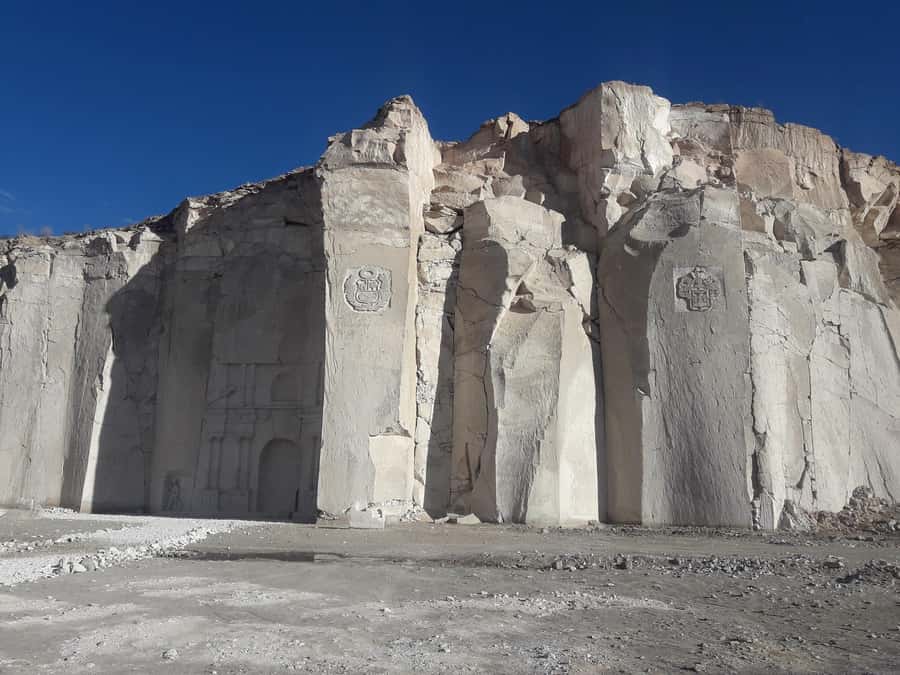
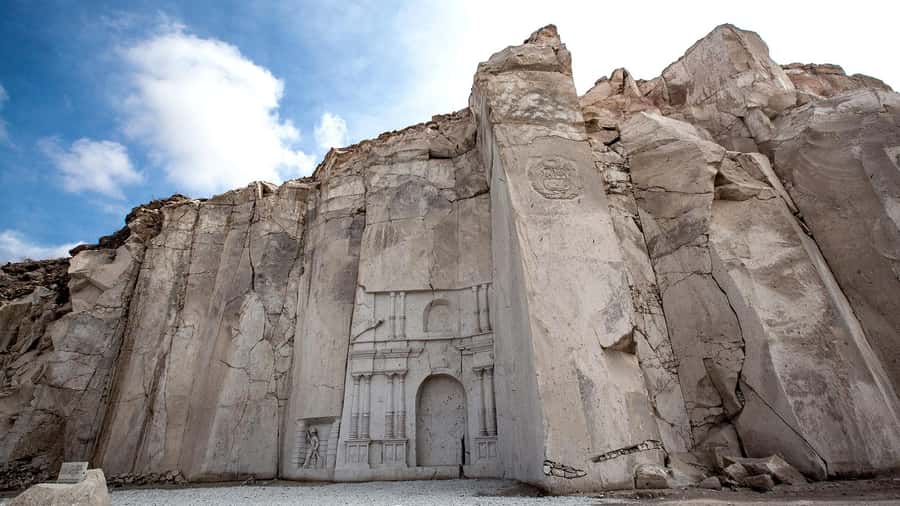
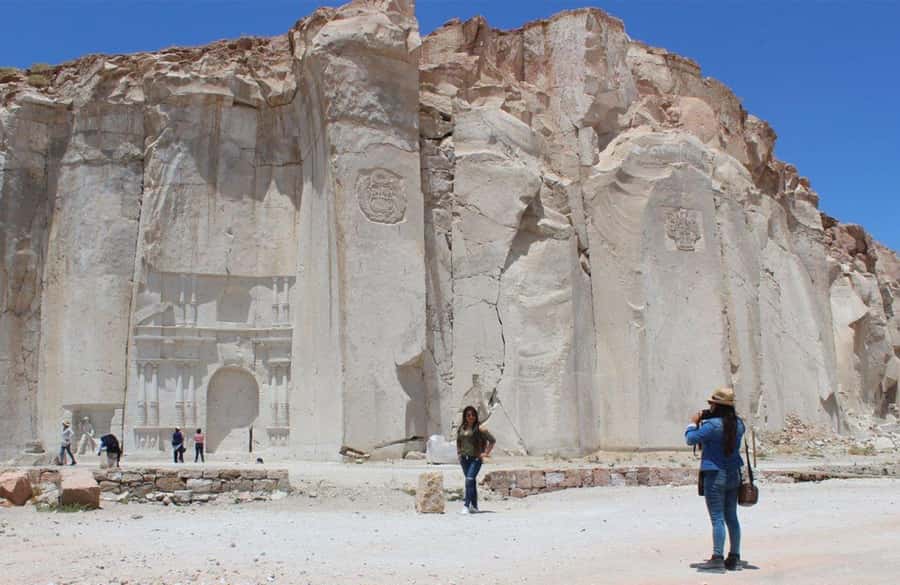
- Añashuayco Quarry: seeing sillar extraction in action (and the Mega carving)
- The “Mega carving” moment: more than a photo spot
- A practical consideration
- Quebrada de Culebrillas: the water-carved canyon walk and Wari petroglyphs
- Petroglyphs at the end of the walk
- Apachetas before you return: the small stone offerings with big meaning
- Timing and logistics: what 4 hours really feels like
- Comfort note: bus conditions can matter
- Price and tickets: is $14 a good deal?
- Who should book this Sillar and Culebrillas excursion
- Should you book the Sillar + Culebrillas route?
- FAQ
- What time does the Sillar and Culebrillas tour start?
- How long is the walk in Culebrillas?
- What will I see at Añashuayco Quarry?
- Are entrance tickets included?
- What languages is the guide available in?
- Is transport included?
- Where do we get dropped off in Arequipa?
- Does the tour offer free cancellation?
Key points to know before you go
- Añashuayco Quarry is still working, so you see real extraction in the quarries of Añashuayco
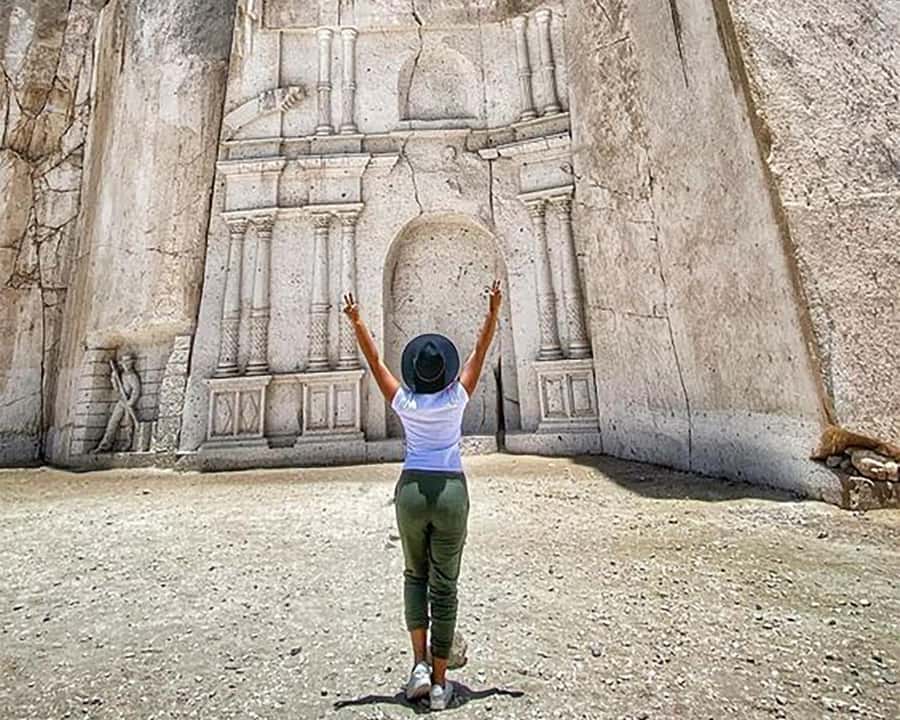
- You’ll meet the Mega carving area, including a large Jesus church carving made by stonemasons themselves
- A 20-minute canyon walk takes you through water-carved walls that reach about 15–20 meters
- Wari petroglyphs appear at the end of the walk, with symbols dating back over a thousand years
- Apachetas (stacked stone offerings) add a spiritual stop before you head back into town
- The tour runs around 4 hours, with a morning shift and also a 2:00pm option
Still shaping the itinerary? Here are more Cusco tours we have written up.
- Cusco: Humantay Lake Tour with Breakfast and Buffet Lunch★ 4.9 · 2,976 reviews
- From Cusco: Moray, Maras Salt Mines & Chinchero Weavers Tour★ 4.8 · 1,925 reviews
- From Cusco: Full-Day Group Tour of Machu Picchu★ 4.7 · 1,767 reviews
- Machu Picchu Day Trip from Cusco★ 4.5 · 1,644 reviews
Why this Sillar + Culebrillas loop makes sense in Arequipa
This is a short, practical way to understand why Arequipa looks the way it does. You start with the stone itself—how sillar forms and how it’s removed—and then you move to a canyon where water carved its own story into rock over a very long time.
What I like about this combo is the balance. One part is human work (quarrying and carving), and the other part is time made visible (canyon walls and ancient petroglyphs). If you only have half a day, it’s a smart hit.
It also works for people who want culture, but don’t want an all-day schedule. The route is compact, the stops are clear, and you finish near Plaza de Armas.
Starting in Arequipa at 09:15: volcano views and a strategic orientation stop
You begin at 09:15am and first head out to a strategic point for a brief stop with views of volcanoes and the Chilina Valley. Depending on the season, the tour can include an additional traditional viewpoint at the start, so you get a better sense of the valley and the surrounding peaks.
This opening stop matters more than it sounds. Arequipa’s big features can feel confusing until you get oriented—where the valleys sit, where the volcano silhouettes line up, and how the quarry area fits into the region. Even a short viewpoint break helps the rest of the day click.
If you’re doing the 2:00pm shift, the idea is the same: start with orientation, then go into the quarry and canyon.
Añashuayco Quarry: seeing sillar extraction in action (and the Mega carving)
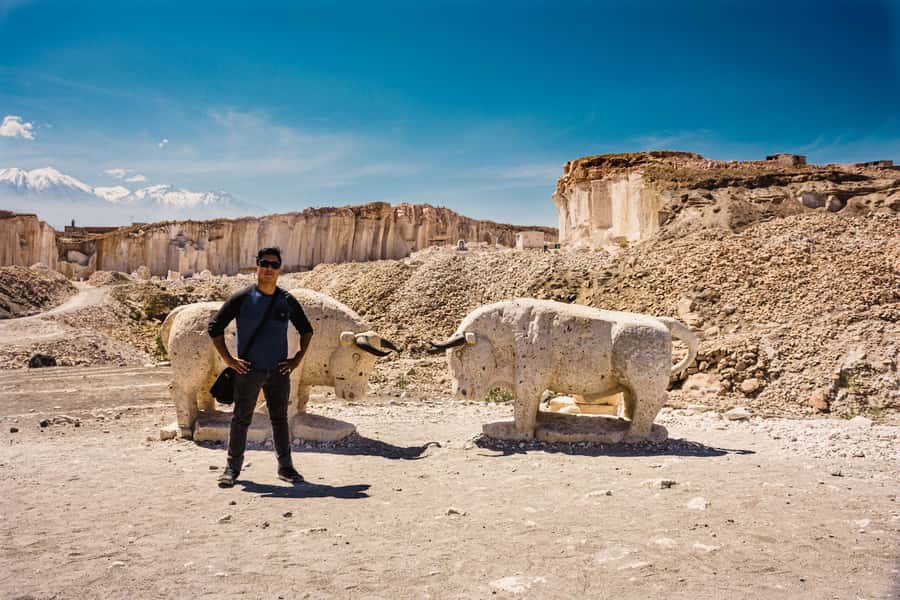
The main quarry stop is the Añashuayco Quarry, reached in about 45 minutes from the start of the excursion. This place is in operation, and you’ll see how quarrymen work very early—so the extraction area has that real working feel, not a staged show.
Here’s what you’re really looking at: a massive canyon-like space with high cliffs formed by extraction for the formation of sillar. As you stand near the quarry walls, you can understand how the stone’s shape and color come from the way it’s cut and removed.
The “Mega carving” moment: more than a photo spot
In the quarry area, you’ll see a mega carving of the Church of the Society of Jesus, made by the stonemasons themselves. I like carvings like this because they show local skill in a visible way, tied directly to the material being quarried.
Even better, the tour sets you up to connect with the people behind it. You may be able to visit one of the stonemasons so he can explain his daily work, and you can even try cutting one of the stone blocks yourself. That hands-on moment turns the quarry from scenery into craft.
A practical consideration
Quarries can mean uneven ground, dust, and strong light. You’ll be there during active work, so I’d plan to stay alert with your footing and keep your eyes open—some of the most interesting details are the small ones around tools and cutting marks.
Quebrada de Culebrillas: the water-carved canyon walk and Wari petroglyphs
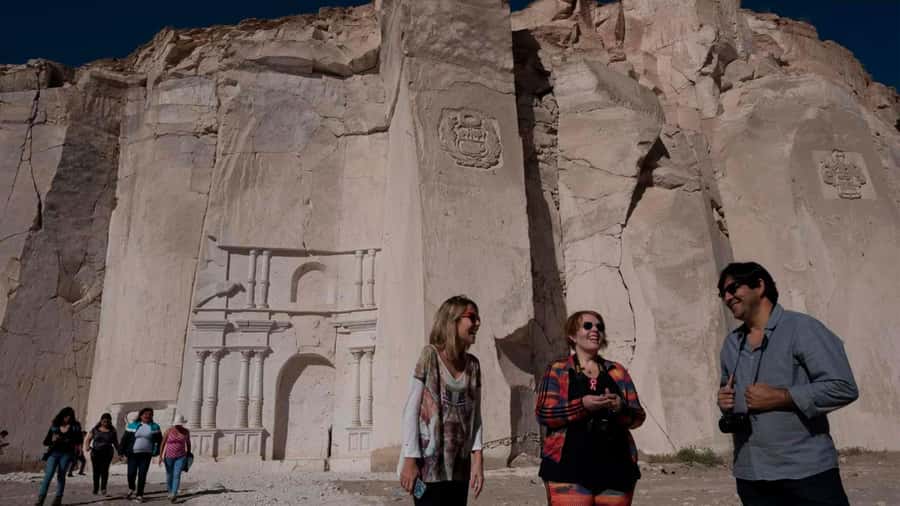
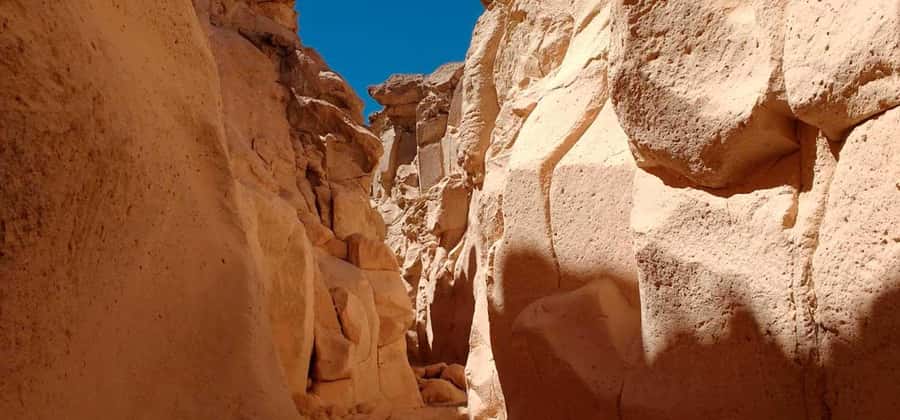
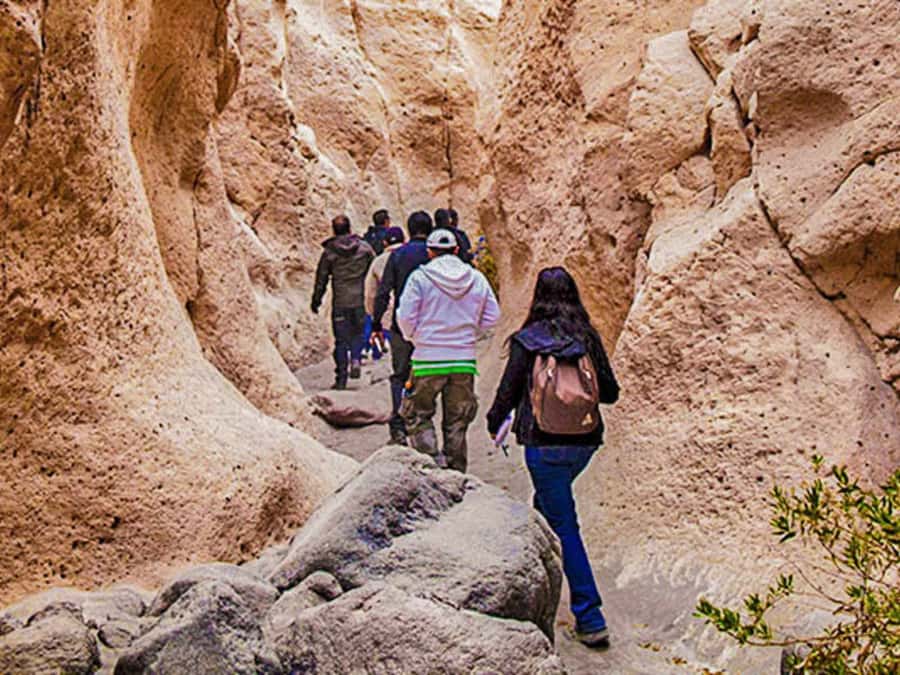
After Añashuayco, the group moves about 30 minutes to Quebrada de Culebrillas. Then you’ll do a walk inside the canyon of around 20 minutes, with walls that measure roughly 15 to 20 meters. As you go deeper, the canyon walls rise, making the space feel tighter and more dramatic.
The canyon is formed by the passage of water, and that process is visible in the way the rock channels the flow and shapes the route. It’s one of those places where the rock looks like it has a timeline written into it.
Petroglyphs at the end of the walk
At the end of the walk, you’ll be able to see petroglyphs made by the Wari culture. The tour describes them as more than a thousand years old, which is a big part of why Culebrillas is so compelling: it’s not just geology, it’s also a human record left on the stone.
This stop is great if you like short, focused walking. You’re not hiking for hours, but you are moving into a tight space where you notice details more closely.
Apachetas before you return: the small stone offerings with big meaning
Before heading back to Arequipa, you’ll observe Apachetas—stone formations stacked one on top of the other. In local meaning, they symbolize gratitude toward nature and also connect with good luck. The tour notes a mystical sensation here, and I’d put it in the category of stops that don’t require you to be a history expert.
I treat Apachetas like a pause button. After quarry walls and petroglyphs, this final stop helps you feel the spiritual layer of the landscape without turning the day into a lecture.
Timing and logistics: what 4 hours really feels like
The morning schedule works like this: after the 09:15 start, you reach Añashuayco in about 45 minutes, then you move to Culebrillas about 30 minutes after that. The canyon walk takes about 20 minutes, and you start returning around 12:30pm, arriving near Plaza de Armas around 1:30pm.
That pacing is one reason this tour is good value. You don’t spend half your time parked on a bus for long stretches. You get a sequence of “learn something, see something, walk a bit, repeat,” and then you’re back in the city while you still have the afternoon free.
Comfort note: bus conditions can matter
One thing I’d factor in based on past experiences: delays can happen if the group has to wait for members. Also, the bus may not have air conditioning, so it helps to dress for warm conditions and bring a light plan for sun and heat.
None of this ruins the tour, but it can affect how you feel about the day’s start time and comfort.
Price and tickets: is $14 a good deal?
The price is $14 per person for the 4-hour experience, and it includes tourist transport plus a professional guide. That matters because you’re not just booking a ticket—you’re paying for getting to two specific out-of-town sites, plus interpretation that helps you understand what you’re seeing.
Entrance tickets aren’t included: you’ll pay 10 soles for entry to the places. So the real cost is usually a little higher than the sticker price once you add that ticket line.
Still, I think the value is strong because the itinerary is compact and the content is hands-on. You’re getting:
- a working quarry stop, not just ruins
- the Mega carving area
- a canyon walk with petroglyphs
- Apachetas, which add meaning beyond photos
If your main goal is to see the Arequipa region’s connection to sillar, this is one of the most direct ways to do it without spending a full day.
Who should book this Sillar and Culebrillas excursion
This tour is a great fit if you want:
- a short Arequipa outing that blends geology, craft, and culture
- an active walk that lasts about 20 minutes
- a guided explanation of how sillar extraction works and what the quarries mean
It’s also a nice choice for people who don’t want to commit to something long and logistically complicated. You’ll end near Plaza de Armas, which is convenient if you’re planning lunch, a museum visit, or just time in the center.
I’d personally skip it if you hate group pacing or you’re very sensitive to schedule changes. Like any shared tour, it depends on everyone arriving when they should.
Should you book the Sillar + Culebrillas route?
If you like travel that’s hands-on and specific, I’d book this. The combination of a working quarry, a visible Mega carving, and a canyon with Wari petroglyphs in just 4 hours is a rare, efficient mix.
Do it if you’re curious about how Arequipa’s signature building stone connects to real people working in real places. And do it if you want a canyon experience that’s short but meaningful—rather than a long trek.
If air conditioning comfort is a must for you, plan mentally for the bus ride. And if you’re on a tight schedule, give yourself a little buffer in the morning.
FAQ
What time does the Sillar and Culebrillas tour start?
The morning shift begins at 09:15am, and the tour is listed as lasting about 4 hours. There is also a 2:00pm shift available.
How long is the walk in Culebrillas?
You’ll take a walk inside the canyon of approximately 20 minutes.
What will I see at Añashuayco Quarry?
You’ll visit the Añashuayco Quarry, which is currently in operation, and see a large Mega carving of the Church of the Society of Jesus made by stonemasons.
Are entrance tickets included?
No. Entrance tickets to the places cost 10 soles and are not included in the tour price.
What languages is the guide available in?
The tour provides a live guide in Spanish and English.
Is transport included?
Yes. Tourist transport is included in the experience.
Where do we get dropped off in Arequipa?
For the 09:15am shift, you arrive in the center of Arequipa and are dropped off near Plaza de Armas.
Does the tour offer free cancellation?
Yes. You can cancel up to 24 hours in advance for a full refund.
More Tour Reviews in Cusco


Recent write-ups from around Cusco, just off the trail
- Cuzco: Rainbow Mountain Excursion
★ 5.0 · 3 reviews - 1 day excursion to Qeswachaka bridge and the 4 lagoons
★ 3.6 · 3 reviews - Waqrapukara 1 day trekking + meals
★ 3.9 · 3 reviews - Valle Sur Cusco | half day
★ 4.3 · 3 reviews - Full-Day Condor Viewpoint & Inca Sites Tour
★ 5.0 · 3 reviews