
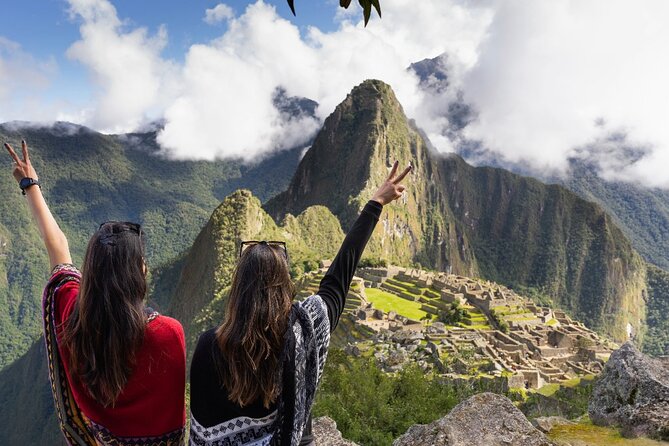
REVIEW · MULTI-DAY PERU TOURS
7 Day Exploration Tour from Cusco to Lima
First day energy is pure Peru. This 7-day trip pairs major highlights like Machu Picchu with quieter moments like the catacombs at San Francisco in Lima. I like that it’s built around day-by-day timing you can actually follow, with a professional guide and included entrances doing the heavy lifting. One thing to note: the schedule is packed, and Rainbow Mountain runs on a very early start, so you’ll want decent stamina and patience with altitude.
I especially like the way the itinerary blends big-ticket sights with variety: city landmarks in Lima, boat wildlife at Islas Ballestas, dune action at Huacachina, then Inca sites around Cusco and the Sacred Valley. I also appreciate the practical safety add-ons listed in the inclusions, like a first aid kit and oxygen balloon. The main drawback is simple: free time exists, but much of your day is moving, so if you want long unstructured wandering every afternoon, this isn’t that kind of trip.
In This Review
- Key things that make this tour click
- A 7-day Cusco-and-Lima route with real structure
- Price and value: what $1,129 buys you
- Lima day 1: Huaca Pucllana, Plaza Mayor, and the San Francisco underground
- Huaca Pucllana (built by the Lima culture)
- Plaza de Armas: the colonial center with constant history
- Museo Convento San Francisco y Catacumbas: the best “wow” in the city
- Circuito Mágico del Agua: an evening that stays fun
- Day 2 coast break: Paracas islands, Pisco making, and desert dunes at Huacachina
- Islas Ballestas: the Galapagos of Peru nickname is earned
- Pisco Nietto: see how pisco is made, then taste
- Huacachina Oasis: sandboarding and sand carts
- Day 3 in Cusco: Cathedral, Qoricancha, Saqsayhuaman, and the surrounding Inca sites
- Cathedral of Cusco and the Temple of the Sun (Qoricancha)
- Saqsayhuaman plus Qenqo, Puka Pukara, and Tambomachay
- Day 4 Sacred Valley: Taray viewpoint, Pisac, Urubamba lunch, and the train to Aguas Calientes
- Taray viewpoint, then Pisac and the artisan town
- Urubamba lunch: a proper mid-day break
- Ollantaytambo and the route to Aguas Calientes
- Day 5 Machu Picchu: guided citadel walk plus time back in Aguas Calientes
- Morning bus to Machu Picchu and a guided tour
- Back down: walk the town, lunch on your own, then train back
- Day 6 Rainbow Mountain (Vinicunca): start before sunrise, hike with a guide, then buffet lunch
- Cusco to Cusipata, then buffet breakfast
- Ascent and talk at the top
- Down the same path, then lunch and back to Cusco
- Day 7 departure: Cusco airport transfer timed for a calm exit
- Who this tour is best for
- About the guides and support you may encounter
- Final verdict: should you book this Cusco–Machu Picchu–Rainbow route?
- FAQ
- Are flights included between Lima and Cusco?
- Where will I spend my nights during the trip?
- What are the big included paid entrances?
- Is breakfast included?
- Is lunch included every day?
- What desert activity is included in Ica?
- How far in advance do people usually book?
Key things that make this tour click
- Two-country, one rhythm: Lima coast sights plus Cusco highlands without you having to stitch logistics together
- Guides for the big moments: guided passes at Machu Picchu and the Inca circuit around Cusco
- Included tickets and transport: entry fees and ride segments are handled so you spend less time figuring out lines
- Paracas by yacht: boat time to Islas Ballestas, not just a drive-by viewpoint
- Ica adventure in the desert: sandboarding and sand carts at Huacachina
- Rainbow Mountain with an early ramp-up: start timing built around a guided ascent and a buffet meal plan
More multi-day loops through the Andes
- 06 Day Andean Jewels of Cusco – Private Service★ 5.0 · 75 reviews
- 8-Day All-Inclusive Peru Tour: Cusco, Machu Picchu, and More★ 4.5 · 54 reviews
- 7-Day Tour: Peru Classic 7 Days★ 5.0 · 51 reviews
- 07 Day Andean Experience Through the Living Culture of the Incas★ 5.0 · 50 reviews
A 7-day Cusco-and-Lima route with real structure
This is the kind of itinerary that makes sense if you want Peru’s headline experiences without turning your vacation into a spreadsheet. You’ll spend the first part in Lima, swing to Paracas and Ica for the coast-desert mix, then fly to Cusco for the highland sequence that builds toward Machu Picchu and finishes with Rainbow Mountain.
The pace is intentional. Peru’s best sites are spread out, and the only way to hit them all in a week is to move efficiently while someone else manages the connections. You still get some breathing room—like lunch time stops or walking time at Aguas Calientes—but most days are designed around guided blocks and timed transport.
Price and value: what $1,129 buys you
At $1,129 per person, the question isn’t just the number. The value comes from what’s bundled: hotel nights, breakfasts and at least some buffet lunches, guided tours, key entrance tickets (including Machu Picchu and the Rainbow Mountain entry), plus the “getting there” costs like transfers and major train/bus segments.
What’s also helpful is how many of the practical headaches are removed. If you’ve ever tried planning Machu Picchu and train timing on your own, you know how quickly it turns into stress. Here, a lot of those moving parts are already lined up, and that’s a big part of why this is popular—its average booking lead time is about 150 days.
Lima day 1: Huaca Pucllana, Plaza Mayor, and the San Francisco underground
Your Lima starts with contrast: archaeological roots, colonial power, and then a baroque church complex with catacombs. That combo is a smart way to “get your bearings fast,” because Lima isn’t only colonial facades. It has older layers still visible if you know where to look.
Huaca Pucllana (built by the Lima culture)
Huaca Pucllana is a pre-Inca complex in the Miraflores area, built by the Lima culture between roughly 200 and 700 AD. The name traces to Quechua, tied to the idea of play or fun—an intriguing reminder that not every ancient site was only solemn. You’ll be there long enough to appreciate it as an archaeological site, not just a quick photo stop.
Why I like it for you: it anchors the day away from pure “tourist Lima.” You’ll feel the city’s deep timeline instead of treating it like one era only.
A last few Cusco tours and experiences to fold into the trip

Plaza de Armas: the colonial center with constant history
Next is Plaza de Armas, Lima’s classic square surrounded by colonial architecture. It’s also where major national moments have been played out since the city’s founding by Francisco Pizarro in 1535. Even if you’re not a museum person, the square works because it’s a living stage—you watch people flow around the buildings and understand why this mattered.
Museo Convento San Francisco y Catacumbas: the best “wow” in the city
San Francisco Convent and the catacombs are often the most memorable part of this Lima day for practical reasons: you see the surface, then you go underground. The underground spaces show historical funerary practices, and the complex also includes a library with ancient manuscripts and religious art in the museum area.
Practical tip: wear shoes you’re comfortable with on uneven surfaces, because catacombs-style visits typically involve a bit more walking than you expect.
Circuito Mágico del Agua: an evening that stays fun
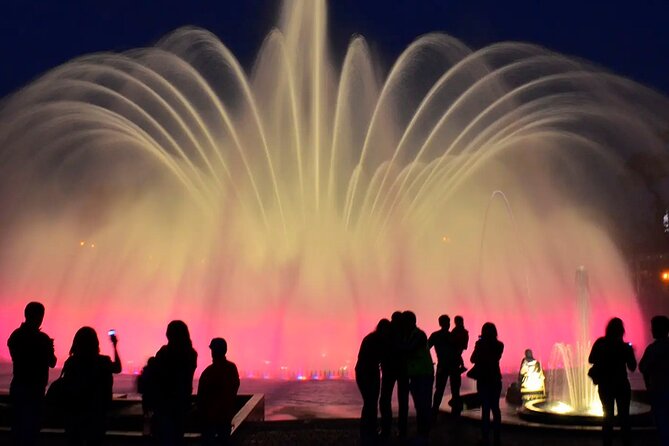
The day ends with the Magic Water Circuit—illuminated fountains with music and effects like the Fountain of Fantasy and the Tunnel of Surprises. This is a “spectacle with structure,” meaning it’s easier to enjoy if you want something light after a heavy sightseeing day.
Consideration: if you’re the type who finds crowds draining, go in with the mindset that this is a popular show. You’ll enjoy it more if you treat it as an easy evening win, not a quiet experience.
Day 2 coast break: Paracas islands, Pisco making, and desert dunes at Huacachina
Day 2 changes tempo—coast wildlife, then distilled spirit craftsmanship, then sand dunes and motion.
Islas Ballestas: the Galapagos of Peru nickname is earned
Islas Ballestas is known as the Galapagos of Peru because of the wildlife concentration. You’ll be on a boat excursion (with a tourist yacht included), with chances to see sea lions, guano birds, and Humboldt penguins. You also get rock formations that help you understand why this reserve is so famous.
Why this works: wildlife trips are hit-or-miss elsewhere. Here, the itinerary builds in the boat component, so you’re not stuck staring from land.
Pisco Nietto: see how pisco is made, then taste
Next is Pisco Nietto, where you learn the distillation process for the spirit known as pisco, with an artisanal approach since 1856. You’ll go through winery facilities and then taste or try products like wines, piscos, Pisco Creams, macerados, and mistelas.
Good to know: this stop is listed as guided by an experienced winery worker. That matters because it turns the visit from a marketing pitch into something you can actually explain later.
Huacachina Oasis: sandboarding and sand carts
Then comes the desert. Huacachina is an oasis in the Ica desert with dunes rising around a lagoon and palm trees. You’ll do sandboarding and take buggies (listed as sand carts in the inclusions).
How to prepare: bring sunscreen and water. Desert stops sound simple, but sun + wind + sand can catch you off guard.
Day 3 in Cusco: Cathedral, Qoricancha, Saqsayhuaman, and the surrounding Inca sites
After your transfer and flight segment, Cusco day is about orientation and Inca engineering. You’ll start with key religious sites, then move into the archaeology around the city.
Cathedral of Cusco and the Temple of the Sun (Qoricancha)
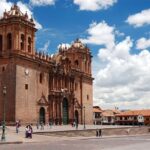
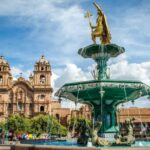
You begin with a visit to the Cathedral, then continue to the Temple of the Sun (Qoricancha). You’ll likely notice the layered story here: Inca sacred spaces replaced or repurposed under colonial rule, which gives you a better sense of why Cusco looks the way it does.
Saqsayhuaman plus Qenqo, Puka Pukara, and Tambomachay
After reaching the upper part of the city, you get a guided tour at Saqsayhuaman, then continue through additional sites: Qenqo, Puka Pukara, and Tambomachay.
This is one of the best choices in the plan. Instead of only seeing one Inca site, you see a sequence of places with different functions and construction styles. The guide’s job is to help you connect the dots so the stones don’t feel random.
Altitude note (practical): this day can feel brisk because you’re still acclimating. Move at your own pace during walking breaks, and keep water in your day bag.
Day 4 Sacred Valley: Taray viewpoint, Pisac, Urubamba lunch, and the train to Aguas Calientes
Sacred Valley is the bridge between Cusco and Machu Picchu. It’s also where the trip adds breathing room compared to city tours, because you get longer scenic drives and a more open pace at lunch and market towns.
Taray viewpoint, then Pisac and the artisan town
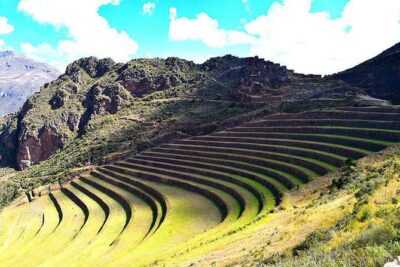
You’ll head to the Sacred Valley, stop at Taray for viewpoints and free time, then continue to Pisac and the artisan town. This is a good “walk and look” block if you like looking at textiles, crafts, and daily life around archaeological areas.
Practical tip: if you plan to buy souvenirs, do it here or in Ollantaytambo later—this itinerary tends to put shopping opportunities near the archaeology.
Urubamba lunch: a proper mid-day break
You’ll enjoy lunch in Urubamba. The inclusions list a buffet lunch at Urubamba as part of the package, so it’s not just a sit-down stop. It’s also your energy refill before the train day.
Ollantaytambo and the route to Aguas Calientes
Next you visit Ollantaytambo (archaeological center), then head to the train station. You take the train from Ollantaytambo to Aguas Calientes (included).
Once you arrive, you get free time in town, and at night there’s a guided explanation visit. That nighttime guidance can help you understand what you’ll see the next morning, and why timing matters at Machu Picchu.
Day 5 Machu Picchu: guided citadel walk plus time back in Aguas Calientes
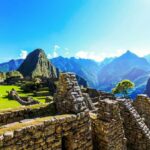
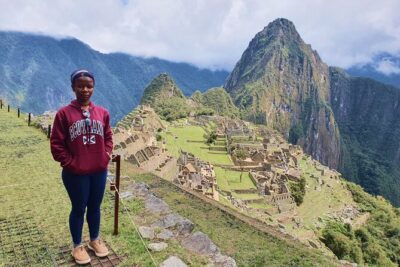
Machu Picchu is the heart of this week. The plan here does a smart thing: it uses a guided tour for the key enclosures first, then gives you a bit of independent wandering and a town break before returning.
Morning bus to Machu Picchu and a guided tour
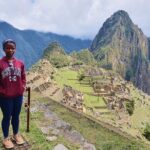
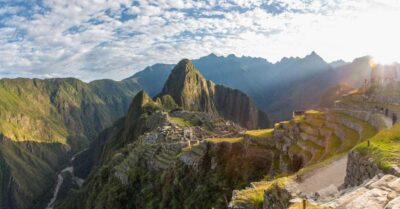
You’ll rise early and take a tourist bus up from Aguas Calientes, arriving for a guided tour that covers the main enclosures (with a time window listed from 09:00 to 11:30). The guided portion is essential here. Machu Picchu is visually stunning, but the guide’s job is to turn it into a story you can follow: why certain structures are placed where they are, how the citadel was used, and what to look for beyond the main postcard angles.
Back down: walk the town, lunch on your own, then train back
After the tour, you return to Aguas Calientes along the same path. You’ll have time to walk through town and have lunch on your own, then you head back by train to Ollantaytambo and transfer to Cusco by bus (listed as a bimodal service).
Consideration: lunch being on your own at Aguas Calientes means you’ll want to budget a little extra. It also means meal choices can vary, so keep expectations flexible.
Day 6 Rainbow Mountain (Vinicunca): start before sunrise, hike with a guide, then buffet lunch
If Machu Picchu is the crown, Rainbow Mountain is the big challenge. This day is built around an early departure and a guided climb that fits into a workable time window.
Cusco to Cusipata, then buffet breakfast
You’ll be picked up around 04:00. The route takes you toward Cusipata, where you get a buffet breakfast before heading to the mountain base.
Ascent and talk at the top
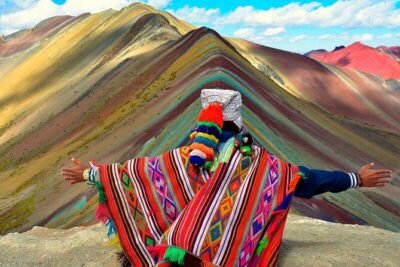
The ascent begins around 08:30, along a marked path with your guide. Once you reach the top, the guide provides a talk about the mountain’s origins, and you’ll have time for photos.
Down the same path, then lunch and back to Cusco
You return by the same trail, then you eat a buffet lunch in Cusipata before heading back to Cusco.
Altitude reality check: this is a high-effort day, and the tour is explicitly listed as moderate fitness. Go in knowing that your breathing rate may be the limiting factor, not your legs.
Day 7 departure: Cusco airport transfer timed for a calm exit
Day 7 is straightforward: you get picked up from your hotel and transferred to the Cusco airport about two hours before. It’s the kind of final-day simplicity that helps you avoid the last-minute stress that can ruin the tail end of a great week.
Who this tour is best for
This itinerary is a strong fit if you want:
- Major highlights in one week without juggling tickets, trains, and transfers
- Guided interpretation for Inca sites and Machu Picchu
- A mix of city culture (Lima), wildlife (Paracas), and active desert time (Huacachina)
- A guided, timed approach that reduces uncertainty on a tight schedule
It’s less ideal if you want a slow travel style with lots of free afternoons for long museum days or lingering in one neighborhood for multiple evenings.
About the guides and support you may encounter
This operator is known for tight coordination and friendly check-ins. In past experiences shared for this company, main contacts like Steven have been praised for being responsive and making logistics feel easy. Guides named in feedback include Elvis, Clara, Jhanet, and Carlos, and coordinators like Aline and Mileny have been specifically mentioned as helpful day-to-day. Depending on your group, you might meet different team members, but the pattern is consistent: people are there to make transfers smoother and explain what you’re seeing.
Final verdict: should you book this Cusco–Machu Picchu–Rainbow route?
I’d recommend booking if you want a “hit the highlights, stay organized” trip that covers Lima, the coast, Cusco, Machu Picchu, and Rainbow Mountain in seven days with many entrances and transport segments handled for you. The value comes from bundled hotels, guided core sights, and the inclusion of the hard-to-plan parts like Machu Picchu and the train timing.
I’d think twice if you’re sensitive to early wake-ups, dislike fast schedules, or prefer unstructured sightseeing over guided blocks. Rainbow Mountain alone is a good test of your stamina, and this route expects you to be able to move on a busy timetable.
FAQ
Are flights included between Lima and Cusco?
No. The tour includes airport transfers and the internal flight timing is described as a national flight you consult separately.
Where will I spend my nights during the trip?
You get two hotel nights in Lima, three hotel nights in Cusco, and one hotel night in Aguas Calientes.
What are the big included paid entrances?
Included entrances listed are: Machu Picchu, Rainbow Mountain (Mountain of Colors/Vinicunca), cathedral and Qoricancha (Cusco), San Francisco Convent and Catacumbas, Water Fountains, and Ballestas Islands.
Is breakfast included?
Yes. Breakfast is included, including breakfasts with your hotel nights and also buffet breakfast on the Rainbow Mountain day (via Cusipata).
Is lunch included every day?
Not every day. A buffet lunch is included on the Sacred Valley day, and another buffet lunch is included for Rainbow Mountain. Lunch at Machu Picchu time is listed as on your own in Aguas Calientes.
What desert activity is included in Ica?
You’ll do sandboarding and sand carts/buggy-style rides at Huacachina.
How far in advance do people usually book?
The average booking time is about 150 days in advance, which is a good hint for planning ahead for popular dates.
More 7-Day Experiences in Cusco


More Tour Reviews in Cusco


More Multi-Day Andes Loops


Recent write-ups from around Cusco, just off the trail
- Cuzco: Rainbow Mountain Excursion
★ 5.0 · 3 reviews - 1 day excursion to Qeswachaka bridge and the 4 lagoons
★ 3.6 · 3 reviews - Waqrapukara 1 day trekking + meals
★ 3.9 · 3 reviews - Valle Sur Cusco | half day
★ 4.3 · 3 reviews - Full-Day Condor Viewpoint & Inca Sites Tour
★ 5.0 · 3 reviews
Multi-Day Peru Tours, compared.
 ★ 5.006 Day Andean Jewels of Cusco – Private ServiceFrom $1,02475 reviews
 ★ 4.58-Day All-Inclusive Peru Tour: Cusco, Machu Picchu, and MoreFrom $84554 reviews
 ★ 5.07-Day Tour: Peru Classic 7 DaysFrom $1,48051 reviews
 ★ 5.007 Day Andean Experience Through the Living Culture of the IncasFrom $1,29950 reviews
 ★ 5.0Magical Cusco Tour 7 daysFrom $1,45233 reviews
 ★ 5.06-Day Tour of Cusco Magico-Machu Picchu-Rainbow MountainFrom $53930 reviews
 ★ 5.06-Day Andean Jewels ExperienceFrom $1,3184 reviews
 ★ 5.0Peru in 5 days: Lima, Cusco, Machupicchu & Rainbow MountainFrom $5593 reviews
Browse the lists this tour appears in