
REVIEW · MARAS & MORAY SALT MINES
Maras Moray
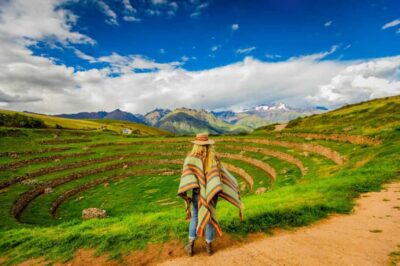
Maras and Moray are the kind of places that make you stop and look twice: circular terraces for experimental farming, then hundreds of salt pans carved into a mountain. This Maras Moray tour from Cusco also adds a stop in Chinchero, so you get Inca-era weaving know-how right before you hit the salt flats.
I especially like how the itinerary balances explanation with time on site. You learn about salt extraction in Maras, and you also get a clear sense of what Moray’s round agricultural terraces were for, not just what they look like.
One drawback to keep in mind: if it’s your first day in Cusco (altitude can make everything feel a bit fast or loud), the pace of the narration can feel quicker than you expect, and photo stops along the drive may be limited.
In This Review
- Key Things to Know Before You Go
- The Big Picture: What You’re Really Seeing at Maras and Moray
- Morning Pickup to Chinchero: Why This Textile Stop Isn’t Just a Quick Shop
- Moray’s Circular Terraces: Seeing an Inca Lab in the Andes
- The Salt Mines of Maras: What Makes This Look Like Another Planet
- Pace and Photo Time: The Tour Is Efficient, Not Rushed
- What’s Included, What’s Not, and How to Judge the True Cost
- What to Bring for a Smooth 6-Hour Day
- Who This Tour Suits Best (And Who Might Want to Skip It)
- Should You Book This Maras Moray Tour?
- FAQ
- How long is the Maras Moray tour?
- What time does the pickup happen?
- Is hotel pickup included?
- Are entrance fees included in the price?
- What languages does the guide speak?
- Is the tour physically demanding?
- Does the tour run every day?
- What should I bring?
- Is the tour suitable for people with mobility impairments?
Key Things to Know Before You Go
- Bilingual guidance (English and Spanish): You’ll have a professional guide, and the information is delivered in both languages.
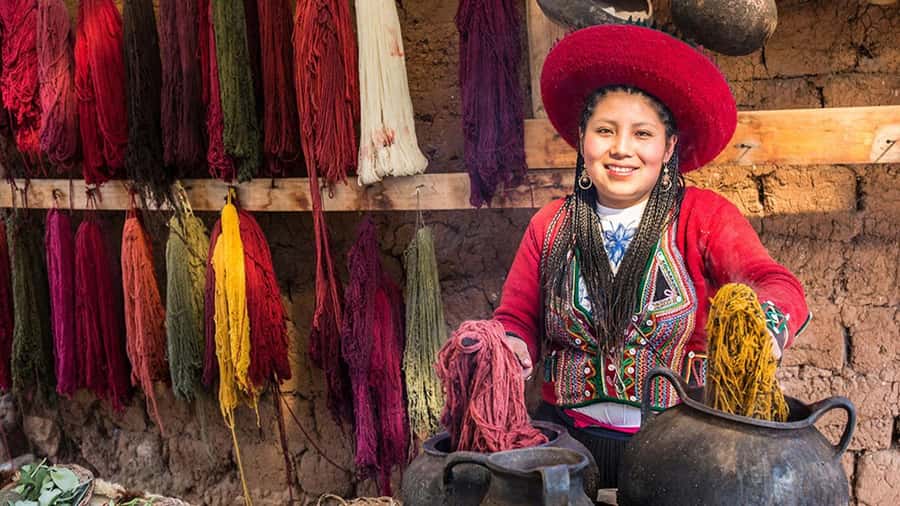
- Chinchero textile stop matters: You’ll see how natural dyes are used to color wool from llamas and alpacas.
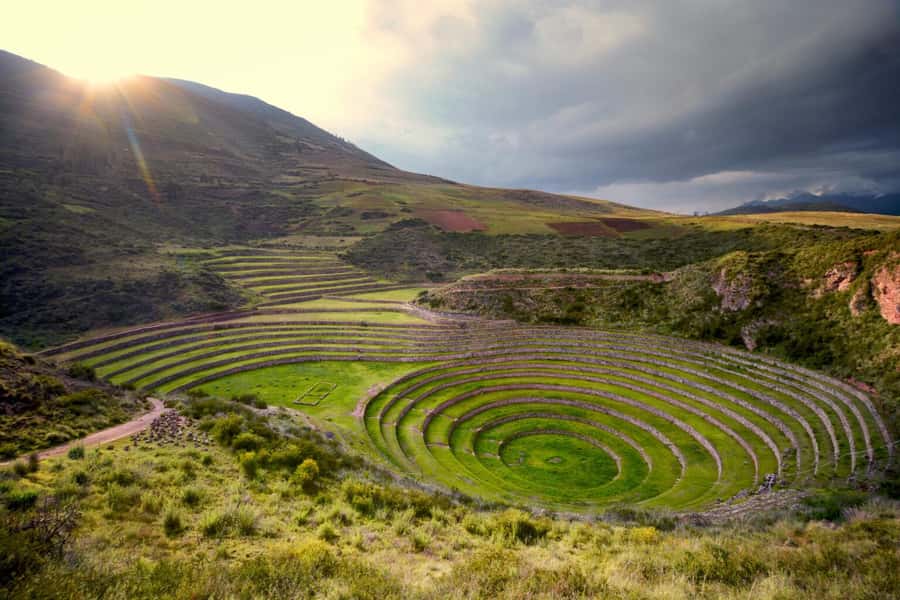
- Moray’s circular terraces have a purpose: It wasn’t just a pretty design; it was an experimental agriculture site.
- Maras salt mines are dramatic at altitude: Sodium chloride water feeds salt production at more than 3000 meters.
- A good half-day rhythm: Enough time at each major stop, without the commitment of a full day trip.
More Maras salt pans and Moray terraces
- from Cusco: Atv Tour Maras, Moray, and Salt Mines★ 4.6 · 17 reviews
- Cusco: Maras Salt Mines & Inca Moray Half Day Trip★ 3.9 · 6 reviews
- Half day tour: Maras Salt Mines and Moray Terraces★ 4.5 · 4 reviews
- Maras Moray★ 5.0 · 3 reviews
The Big Picture: What You’re Really Seeing at Maras and Moray
This is a classic Cusco-region combo tour for one reason: it links two different ways people used the Andes to survive. Moray shows how the Inca played with climate and crop variety using the terraces’ design. Maras shows how salt, a key preserving and seasoning resource, was produced using mountain water.
The total time is about 6 hours, with morning pickup at around 08:30. That timing is ideal if you want something substantial but not all-day—especially when you’re still getting used to the altitude in Cusco.
You’ll move by bus between sites, with stops in Chinchero and then on to Moray, finishing at the salt mines of Maras before returning to Cusco.
Morning Pickup to Chinchero: Why This Textile Stop Isn’t Just a Quick Shop
Your day starts with pickup from your hotel or accommodation. Plan to be waiting around 5 minutes before the scheduled time at reception, since the guide will call your name. Then you’ll head out by bus.
The first meaningful stop is Chinchero, a town known for artisanal textile production using techniques passed down for generations since Inca times. If you’re interested in textiles, this is the part of the tour that often feels most hands-on and human. It’s not just stone and views; it’s craftsmanship.
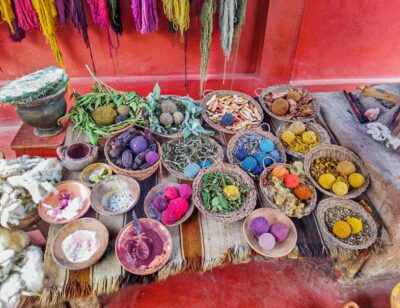
In the textile center, you’ll get to appreciate how dyes are made from natural materials and how different wools are dyed—both llama and alpaca. You’ll also see the finished products. Keep your expectations realistic: this stop can be more focused on demonstrations and sales than a long free-wandering stretch, so if you want maximum strolling time, don’t count on it.
Practical tip: bring cash. Even if you’re not shopping, having small bills helps if you want a snack or a small textile item without stressing later.
Moray’s Circular Terraces: Seeing an Inca Lab in the Andes
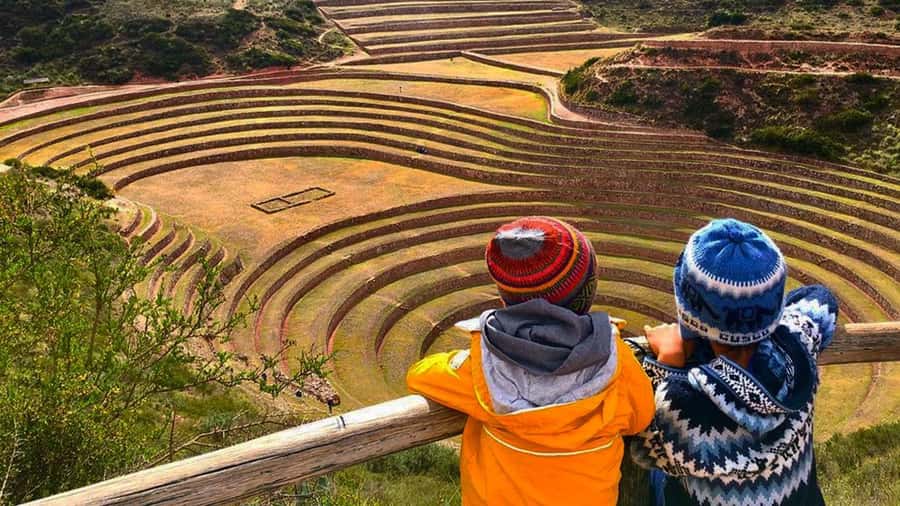
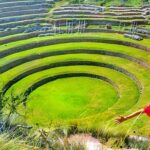
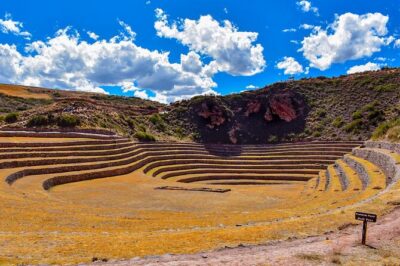
After Chinchero, you’ll head to the archaeological park of Moray. Moray is famous for its circular terraces, and that circular layout is one of the reasons it’s so distinctive among Inca constructions. The idea wasn’t just to farm in a normal way; the terraces functioned as an experimental site.
Here’s what makes it click: these terraces were used to obtain and domesticate different varieties of crops—things like corn, potatoes, and olluco. The layout helps create varied growing conditions, so the Inca could test and manage agriculture more intelligently than a one-size-fits-all field.
You’ll also get big Andean scenery while you’re there. The mountains and snow-capped peaks nearby were considered apus (deities) in Inca times. Even if you don’t focus on the religious meaning, the setting helps you understand why the Inca loved these places: the environment is the teacher.
How much time do you get at Moray? You’ll have enough time to walk around and absorb the terraces, not just stand at the entrance. The pace is generally smooth, and you should be able to take photos while the guide explains.
Good footwear helps here. Terraces can be uneven, and you’ll want sports shoes rather than sandals.
The Salt Mines of Maras: What Makes This Look Like Another Planet
Then comes the reason many people book this tour: the salt mines of Maras.
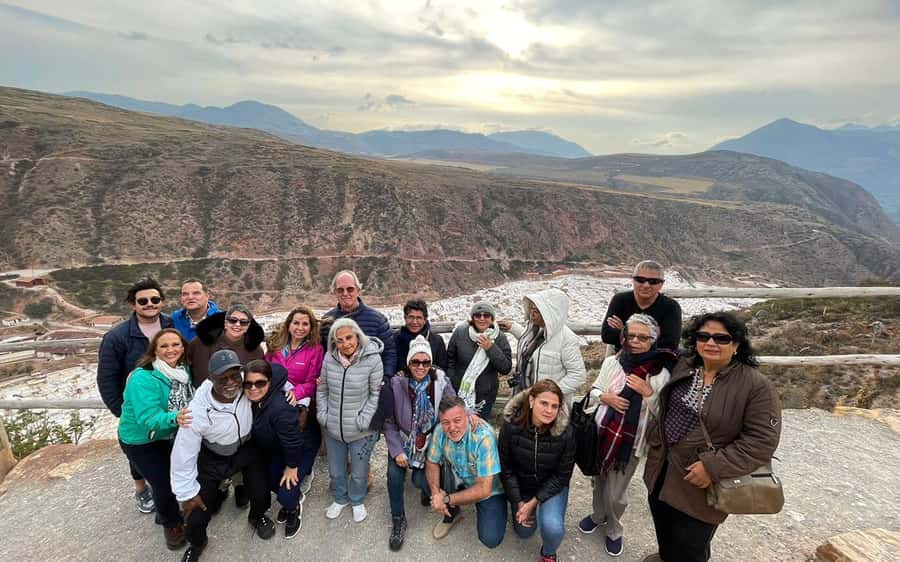
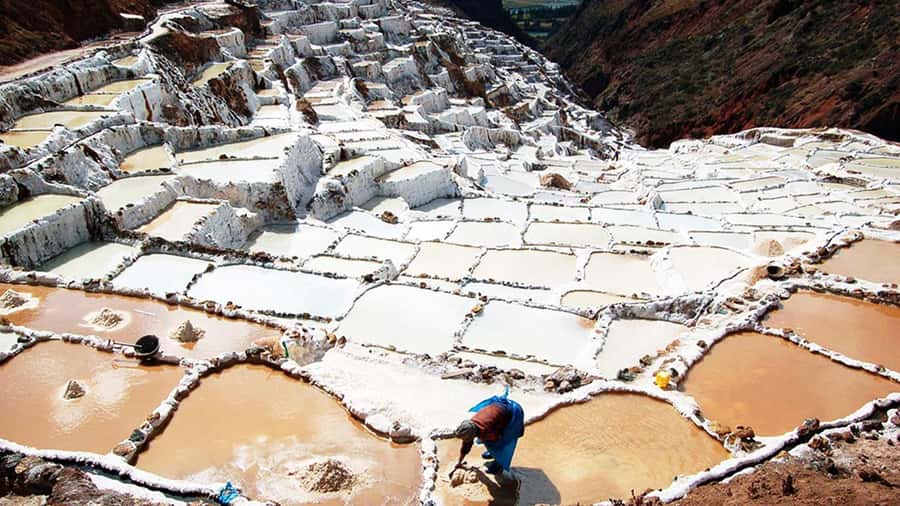
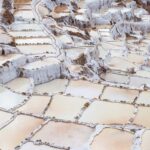
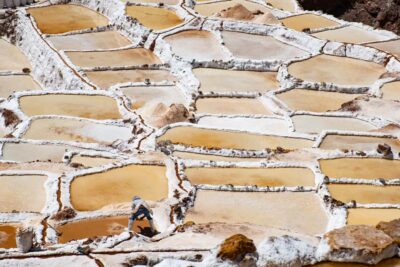
The salt production is possible because of water sources carrying sodium chloride that come from the mountains. That water feeds the salt pans at more than 3000 meters above sea level, which is part of what makes the landscape so unusual. The salt doesn’t sit in one neat quarry—production happens across a wide area with lots of small parcels.
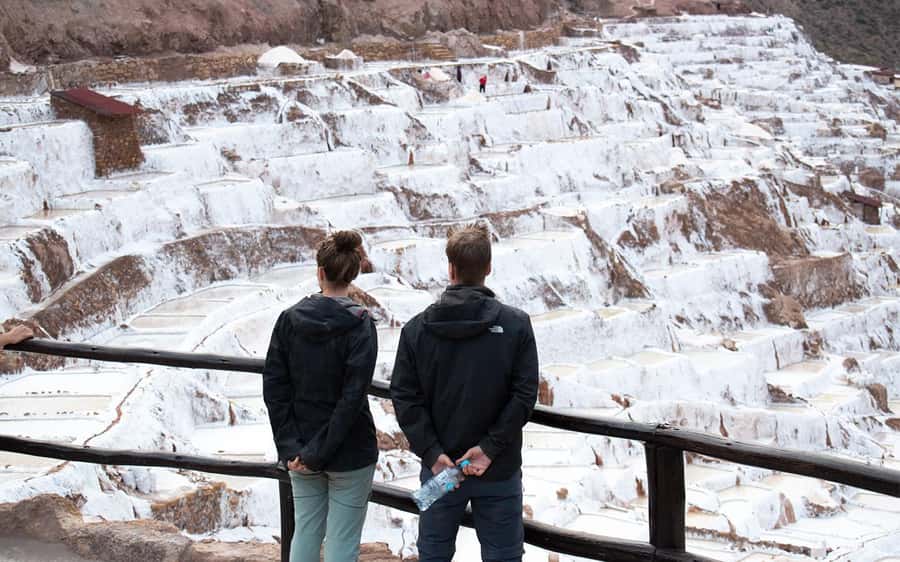
You’ll see around 3,800 salt production lands, which is why the whole place has that scattered, grid-like look. In person, it can feel almost unreal: a mountain covered in countless little pools.
This stop is great for photos, but also for understanding scale. It’s one thing to read that people extracted salt. It’s another to stand in a place where the terrain itself seems built for the job. The views back toward the Andes also help. You’re not just visiting an industrial-like site; you’re watching human work shaped around a dramatic landscape.
A realistic expectation: it can be bright. Plan for sunscreen and bring water, because you’ll want to keep comfortable while you look around.
Pace and Photo Time: The Tour Is Efficient, Not Rushed
A key strength of this experience is how it manages time across different stops. The tour is designed to cover a lot without dragging. At each location you get a chance to listen, then actually look.
In one example of how the day can feel, the guide Raul was noted for translating clearly into good English and keeping a steady pace. The same guide recognized when the group was focused on photos and allowed walking time while explanations were happening for other parts of the group.
Your takeaway as a planner: don’t assume the tour will stop for a lot of random roadside photos on the drive. You’re mostly there for Chinchero, Moray, and Maras. If you want the best shots, prioritize time where you’re actually stepping out of the vehicle.
What’s Included, What’s Not, and How to Judge the True Cost
The price is listed as $18 per person, and that typically covers the essentials: hotel pickup, tourist transport, and a professional guide in English and Spanish.
What’s not included is important for budgeting:
- Tourist ticket: USD 20.00
- Entrance to Maras: USD 7.00
So your all-in day cost can be closer to $45 total (depending on how your tourist ticket is used across the sites). That’s still reasonable if you want transportation plus bilingual interpretation for multiple destinations. If you’re already paying entry fees for other Cusco-region sites, the math may feel even better.
I like judging it this way: you’re paying for logistics and meaning, not just access. The value comes from having a guide connect Chinchero textiles, Moray terrace agriculture, and Maras salt production into one understandable story.
What to Bring for a Smooth 6-Hour Day
This tour is not described as high physical effort, but you’ll still want to be comfortable walking on uneven terrain and spending time outdoors. Here’s what you’ll be glad you packed:
- Sports shoes (seriously)
- Camera
- Sunscreen
- Cash (for entrances, snacks, and any small buys)
- Passport or ID
- Personal medication
- A snack and bottle of water (the tour lasts about half a day)
Because you’re at higher altitude around Cusco and moving outdoors, plan for brightness and dry conditions. Even if you don’t feel thirsty right away, dehydration can sneak up.
Who This Tour Suits Best (And Who Might Want to Skip It)
This is a good fit if you want a structured Cusco-area tour that hits major sights without requiring a full-day schedule. You’ll enjoy it if you like:
- Inca-era agriculture concepts (Moray)
- Craft and dye work (Chinchero)
- Salt production landscapes and scale (Maras)
It’s also a solid choice for your first days in Cusco, since it’s only about 6 hours and designed around a half-day commitment.
It’s not suitable for people with mobility impairments, based on the tour being described that way. If you need step-free access, you should look for a different format.
Should You Book This Maras Moray Tour?
If you’re trying to choose between a long day trip and something lighter, I’d lean toward booking this one. You get three distinct experiences—Chinchero textiles, Moray terrace agriculture, and Maras salt mines—within a manageable half-day window.
Book it if you want interpretation, transport, and a clear storyline for how Andean people used the land and resources. Skip it (or ask more questions) if you’re expecting lots of long free time in towns or a slow, extra-scenic drive with frequent photo stops. This tour is efficient: the best time goes to the main stops.
If your goal is to see the iconic Maras and Moray sights without losing a whole day, this is the kind of trip that makes Cusco feel connected, not just sampled.
FAQ
How long is the Maras Moray tour?
The duration is about 6 hours.
What time does the pickup happen?
Pickup is scheduled for around 08:30.
Is hotel pickup included?
Yes. Pickup from your hotel or accommodation is included, and the guide will call your name.
Are entrance fees included in the price?
No. The tourist ticket (USD 20.00) and entrance to Maras (USD 7.00) are not included.
What languages does the guide speak?
The guide provides live interpretation in English and Spanish.
Is the tour physically demanding?
No. It is described as not requiring high physical effort.
Does the tour run every day?
Yes, it is enabled every day of the year.
What should I bring?
Bring a camera, sports shoes, cash, sunscreen, your passport or ID card, and any personal medication. You can also bring a snack and water.
Is the tour suitable for people with mobility impairments?
No, it is not suitable for people with mobility impairments.
More Tour Reviews in Maras
More Salt Pans and Terraces
Recent write-ups from around Maras, just off the trail
- Maras Moray
★ 5.0 · 3 reviews - Half day tour: Maras Salt Mines and Moray Terraces
★ 4.5 · 4 reviews - Cusco: Maras Salt Mines & Inca Moray Half Day Trip
★ 3.9 · 6 reviews - from Cusco: Atv Tour Maras, Moray, and Salt Mines
★ 4.6 · 17 reviews
Maras & Moray Salt Mines, compared.
 ★ 4.8From Cusco: Sacred Valley & Maras Salt Mines Tour with LunchFrom $282,227 reviews
 ★ 4.8From Cusco: Moray, Maras Salt Mines & Chinchero Weavers TourFrom $151,925 reviews
 ★ 4.6Sacred Valley, Pisac, Ollantaytambo, Salt Mines MorayFrom $281,058 reviews
 ★ 4.8Chinchero,Moray & Salt Mines drop-off in OllantaytamboFrom $27793 reviews
 ★ 4.8Sacred Valley: Chinchero, Moray, Ollantaytambo & Pisac+LunchFrom $25501 reviews
 ★ 4.6Sacred Valley: Maras & Moray by Quad Bike from CuscoFrom $39418 reviews
 ★ 4.7From Cusco: Quad bike tour Moray and Salt MinesFrom $27314 reviews
 ★ 5.0From Cusco: Moray, Maras Salt Mines & Chinchero Weavers Half-DayFrom $15126 reviews
Browse the lists this tour appears in