
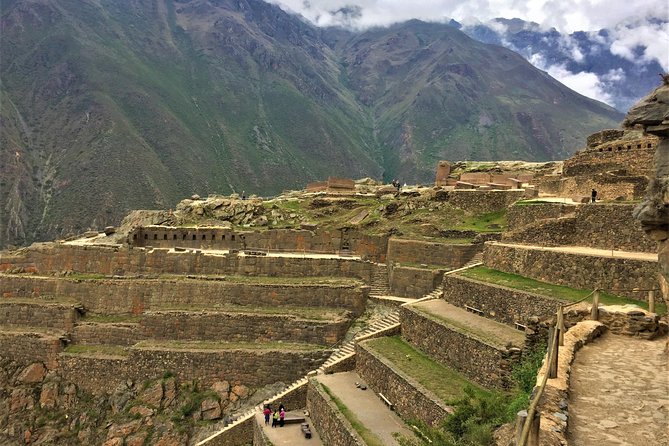
REVIEW · CUSCO CITY & SACSAYHUAMAN
Cusco City Tour with Sacsayhuaman & Inca Sites – Small Group
Cusco can feel like a puzzle at first. This tour is a guided way to fit the pieces together, starting in the Plaza de Armas and then pairing Inca engineering with Spanish layers of history. You get a real route, not a wandering loop, and you’ll see why Cusco was both a ceremonial center and a city designed with care.
I especially like two things: first, the small-group size (max 16), which makes it easier to ask questions and keep a steady pace. Second, the itinerary covers five major Inca sites plus Coricancha, so you’re not choosing between city highlights and fortress-and-temple stops.
One thing to consider: it’s not a full cathedral visit, and you’ll do a fair amount of walking (plus vehicle transfers) over about 4 to 5 hours. If you’re sensitive to uneven steps or quick elevation changes, go slow and plan on steady movement.
In This Review
- Key things to know before you go
- Why This Cusco Highlights Route Works in 4–5 Hours
- Plaza de Armas and Loreto Street: Get Your Bearings Fast
- Coricancha: The Sun Temple Under Santo Domingo
- Sacsayhuaman: Fortress Walls and Big-Cusco Panoramas
- Qenqo: A Stone Ceremonial Center with Hidden Meaning
- Puka Pucara: Red Fortress and a Military-Route Story
- Tambomachay: Water Fountains and a Calm Ending
- Price and What You’re Really Getting for $98
- The Small-Group Experience: What It Feels Like Day-of
- Who Should Book This Tour (and Who Might Prefer Something Else)
- Should You Book This Cusco City Tour?
- FAQ
- What time does the tour start?
- How long is the Cusco City Tour with Sacsayhuaman & Inca Sites?
- Where is the meeting point?
- Do you get hotel pickup and drop-off?
- What’s included in the tour price?
- What is not included?
- Is the tour only in the afternoon?
- How many people are in the group?
- Is it physically demanding?
- What if I need to cancel?
Key things to know before you go
- Small group up to 16 means less chaos and more guide time.
- Coricancha is included with entry, so you don’t have to think about tickets for that stop.
- Sacsayhuaman + Qenqo + Puka Pucara + Tambomachay come under a partial Tourist Ticket (Circuit I).
- Plaza de Armas and Loreto Street are built into the opening, so Cusco feels understandable fast.
- You start at 1:00 pm, with an option for morning or afternoon departures.
More Cusco city and Sacsayhuaman walks
- City Tour Cusco Qoricancha Sacsayhuaman y Tambomachay★ 4.7 · 617 reviews
- Cusco: Sightseeing Tour of the City on an Open-Top Bus★ 4.0 · 481 reviews
- Open Bus Cusco City Tour★ 4.5 · 219 reviews
- Cusco: City Tour | Half-Day Tour to 4 Archaeological Sites★ 4.6 · 206 reviews
Why This Cusco Highlights Route Works in 4–5 Hours
This is the kind of tour I like when your Cusco time is limited but you still want the big “wow” moments. You begin in the center at Plaza de Armas and move outward with a guide who gives context instead of dumping facts like a textbook.
The pacing is built around variety. You get a walk through the historic core, then you hop by vehicle to major sites outside town. That matters because Cusco’s streets can be slow to navigate on your own, especially when you’re trying to match buildings you see on the street with what you’re learning.
Also, the size is capped at 16 travelers, which keeps the group from turning into a slow-moving crowd stampede at each overlook.
Plaza de Armas and Loreto Street: Get Your Bearings Fast
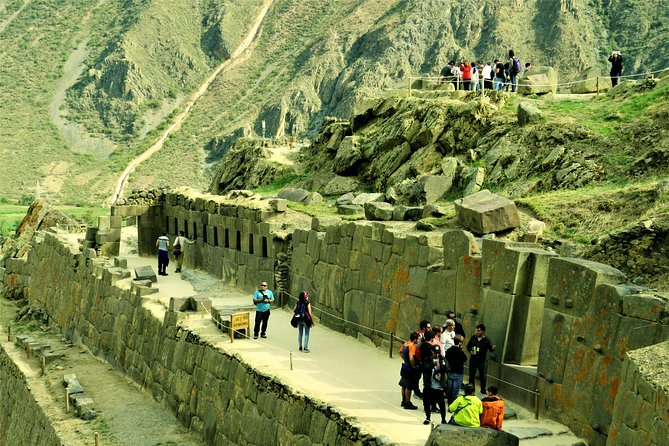
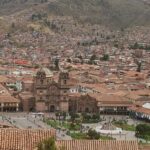
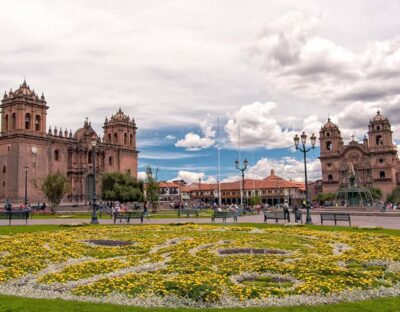
Your tour kicks off at 1:00 pm at Plaza de Armas. This is the best place to start because it’s the visual heart of Cusco: you immediately see the colonial-era prominence of the square, but your guide connects it to the earlier Inca significance of the same ceremonial zone.
From here, you’ll walk to two early “Inca Cusco” stops that do a great job setting the tone:
- The 12 Angled Stone, set into an ancient wall. It’s famous because the stones fit so precisely that it looks less like construction and more like sculpture and math combined.
- Loreto Street, highlighted as one of the finest examples of Inca urban design, with original stone walls on both sides.
If you’ve ever felt lost in Cusco’s layers, this opening fixes that. The guide helps you read what you’re looking at. Even if you only remember one thing, it’s usually this: the Inca city planning is still visible under the later colonial footprint.
Practical note: this is a walking segment, and Cusco’s historic streets can be uneven. Wear shoes that don’t mind cobblestones and take your time.
Coricancha: The Sun Temple Under Santo Domingo
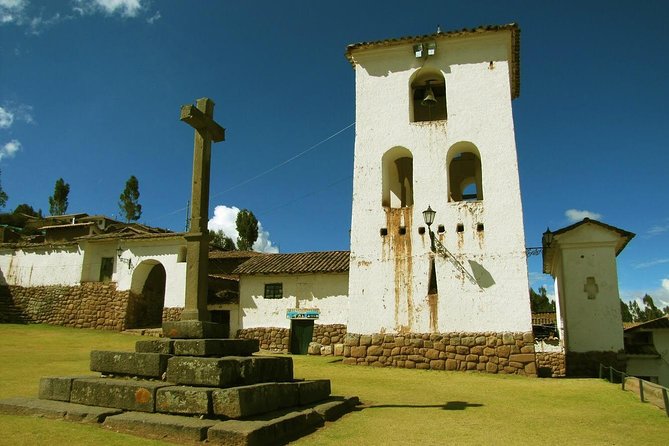
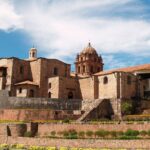
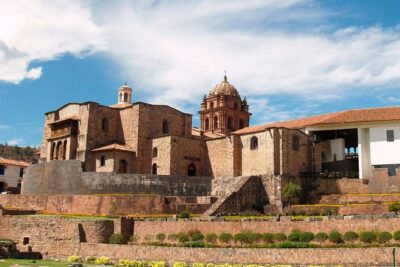
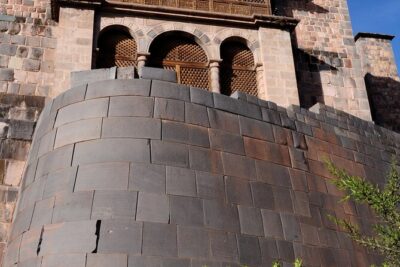
Next comes Coricancha, once described as the most important temple in the Inca Empire, dedicated to the Sun. The real star here is the contrast. The Spanish built the Santo Domingo convent on top of the original Inca foundations, so you get a layered view of power shifting over time.
At Coricancha, you’ll see how the Spanish architecture sits over the Inca stonework. Your guide also explains that the temple was once covered in gold and used for major ceremonies and astronomy. That mix of worship, observation, and political importance is what makes Coricancha more than just a pretty building.
Good news for your budget: Coricancha entrance is included. That’s one less ticket you have to figure out mid-trip.
Time-wise, plan for about 30 minutes here. It’s not meant to be a museum marathon, but it’s long enough to absorb the big idea and take a few photos without feeling rushed.
Sacsayhuaman: Fortress Walls and Big-Cusco Panoramas
After Coricancha, you’ll travel to Sacsayhuaman, the Inca site that looks down over Cusco like a stone guardian. This is one of the places where photos almost work, but your eyes still need to see the scale in real life.
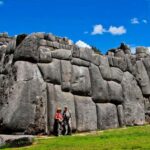
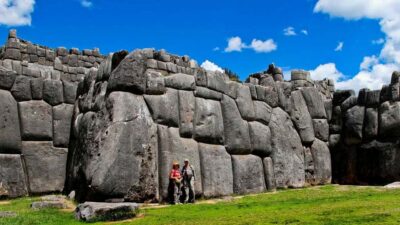
Sacsayhuaman is famous for its giant zigzag stone walls, with blocks fitted so tightly that it’s hard to imagine how it was built. Walking through the site while your guide explains battles, ceremonies, and how it connects to present-day traditions makes these walls feel like something lived in, not just something to admire.
There’s also a festival tie-in. Your guide shares how Sacsayhuaman still plays a role during Inti Raymi. Even if you’re visiting outside festival season, that detail helps you understand why this place mattered beyond war and storage.
You’ll also enjoy some of the best panoramic views of Cusco and surrounding mountains from here. If you want just one stop for the classic “Inca fortress view,” this is it.
This stop is part of the included partial Tourist Ticket (Circuit I).
A last few Cusco tours and experiences to fold into the trip
Qenqo: A Stone Ceremonial Center with Hidden Meaning
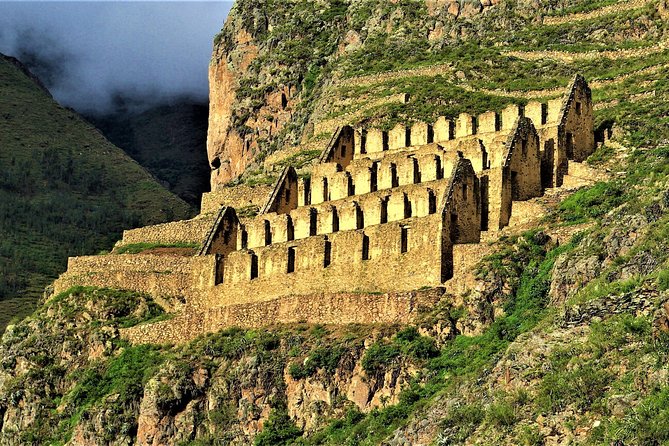
From Sacsayhuaman you head to Q’uenqo (Qenqo), a ceremonial center carved heavily out of rock. If Sacsayhuaman feels like “power and defense,” Qenqo feels more like “ritual and observation.”
You’ll explore winding passages, carved channels, and areas that could have served as hidden altars. The name Qenqo means zigzag in Quechua, and once you’re inside, it’s easier to understand why.
The guide also covers theories about what the site was used for and the spiritual meaning behind it. Since exact functions aren’t always fully agreed upon, this is a place where interpretation matters. You don’t want a guide who says one thing and moves on; you want someone who can show how scholars connect clues to possible uses. That’s also where a strong guide can really change your experience.
This stop is included under the same Circuit I partial ticket.
Time here is around 30 minutes, so you’re not stuck—just enough to get the feel of a ritual place carved from one piece of stone.
Puka Pucara: Red Fortress and a Military-Route Story
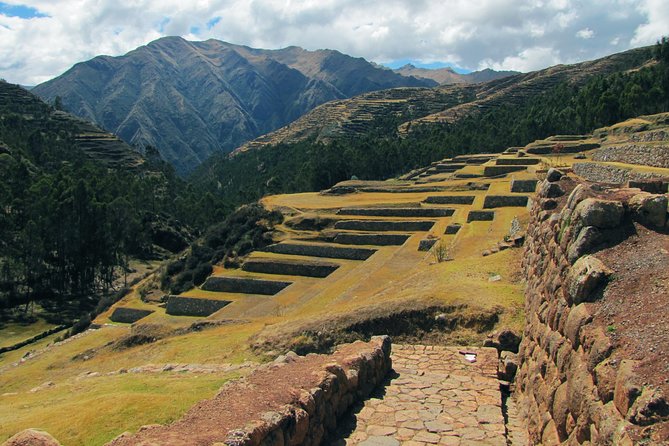
Your next stop is Puka Pucara, meaning Red Fortress in Quechua. Compared to Sacsayhuaman, this place is smaller, but that’s part of its charm.
Your guide explains why it likely served as a military checkpoint and rest point on a road linking Cusco with the Sacred Valley and the jungle. That road idea helps you see these sites as parts of a system, not isolated monuments.
You’ll walk through the terraces and stone walls, and the open views let you imagine travelers moving through the area. Your guide points out guard posts, walls, and rooms, so you understand how a compact site could still protect the capital.
This stop is included in the Circuit I partial ticket, but it’s listed as admission ticket free in the itinerary. Either way, you’re covered on entry for this part of the circuit based on what’s included in your tour package.
Practical tip: if you like when guides slow down and show how people lived and moved, you’ll probably enjoy Puka Pucara a lot. It’s the stop where the story becomes “routes” and “roles” instead of only “buildings.”
Tambomachay: Water Fountains and a Calm Ending
Finally, you reach Tambomachay, often called the Inca Baths. It’s known for clear water fountains and elegant stonework. Unlike the more dramatic fortress-and-ceremony vibe, Tambomachay is a calmer way to close the day.
Your guide connects it to water worship or rest. You’ll see aqueducts and canals engineered to carry water even after hundreds of years. That detail lands well because it’s not just visual; it’s functional. You can look at the structure and understand it wasn’t built for show.
This is also a good spot for photos and a breather before heading back toward Cusco. The itinerary keeps this at around 30 minutes, so you’ll enjoy the quiet without feeling like you’re waiting around.
Tambomachay is part of the Circuit I partial ticket and is included.
Price and What You’re Really Getting for $98
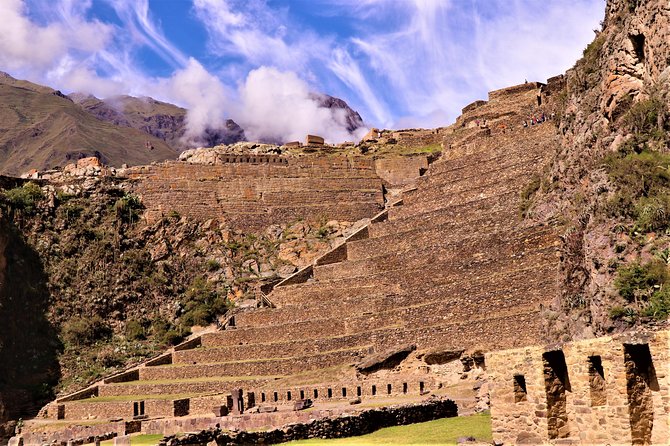
At $98 per person, the value here comes from two main things: guidance and bundled access.
You’re paying for:
- A professional guide for the full route
- Hotel pickup and drop-off within the Cusco Historic Center
- Included entry for Coricancha
- The partial Tourist Ticket (Circuit I) for major Inca sites: Sacsayhuaman, Qenqo, Puka Pucara, Tambomachay
What’s not included matters too. The Cathedral entrance and visit is not part of the package, and there are no meals or snacks.
So, is it expensive or fair? For Cusco, $98 feels reasonable when you consider that entry and guided interpretation are usually where you lose time—and money—on your own. The guide helps you understand what you’re seeing at each stop, and the ticket bundle reduces the ticket-chaos factor.
If cathedral time is a must for you, you may want to plan to visit it separately on another day. This tour gives you Inca sites and Coricancha as the anchor points.
The Small-Group Experience: What It Feels Like Day-of
A group cap of 16 makes the day feel more human. You’ll have fewer moments where you’re trying to see over shoulders. And when your guide asks if everyone can hear, it usually means the pace stays reasonable.
In the wider set of tours run by this provider, a common theme in praised experiences is the guide’s storytelling style—people describe guides who bring the Quechua and Inca side of the story to life, and who handle questions without making you feel rushed. While your specific guide may vary, that same focus on explanation is the core value of the tour format here.
Also, the route includes both walking and vehicle transfers. That’s practical because the long distances would be slow and frustrating without transport.
If someone in your group has a slower pace, your guide can’t change the sites, but a smaller group can make it easier to adapt timing so nobody gets left behind at the wrong moment.
Who Should Book This Tour (and Who Might Prefer Something Else)
This tour is a strong match for you if:
- You want Cusco highlights without getting lost
- You prefer a structured route that connects Inca and colonial history
- You’re short on time and want several major sites in one go
- You like panoramic viewpoints and storytelling, not just photo stops
It might be less ideal if:
- You want a full cathedral visit as part of the core plan
- You’re hoping for a long, deep museum-style stop at any single site (this is paced for 4 to 5 hours total)
- You need a very slow, minimal-walking itinerary. The tour says moderate physical fitness is recommended, which usually means you should expect uneven ground and some walking segments.
Should You Book This Cusco City Tour?
Yes, if you want an organized way to understand Cusco fast. The combination of Plaza de Armas orientation, Coricancha, and the stacked Inca sites—Sacsayhuaman, Qenqo, Puka Pucara, Tambomachay—is exactly what you want when you’re trying to connect the dots between architecture, ritual, and engineering.
If you’re the type who gets annoyed when a guide points and leaves, this tour is built for you. You’ll get a guided narrative at each stop, and the ticket bundle reduces stress. Just plan ahead that cathedral entry isn’t included here, and bring patience for the fact that you’ll be moving through multiple sites in one afternoon.
Book it when you can, especially since it’s commonly reserved about 45 days in advance.
FAQ
What time does the tour start?
The tour starts at 1:00 pm.
How long is the Cusco City Tour with Sacsayhuaman & Inca Sites?
It runs about 4 to 5 hours.
Where is the meeting point?
The meeting point is Plaza de Armas, Cusco 08000, Peru.
Do you get hotel pickup and drop-off?
Yes. Pickup and drop-off are included for hotels in the Cusco Historic Center.
What’s included in the tour price?
The tour includes hotel pickup/drop-off, Coricancha entrance, a partial Tourist Ticket – Circuit I (Sacsayhuaman, Qenqo, Puca Pucara, Tambomachay), and a professional tour guide.
What is not included?
Cathedral entrance and visit, meals and snacks, and travel insurance are not included.
Is the tour only in the afternoon?
You can choose from morning or afternoon departures. The itinerary provided begins at 1:00 pm.
How many people are in the group?
The group size is capped at 16 travelers.
Is it physically demanding?
The tour recommends moderate physical fitness.
What if I need to cancel?
There is free cancellation if you cancel up to 24 hours in advance for a full refund.
If you want, tell me your travel dates and whether you prefer a morning or afternoon departure, and I’ll help you decide which day is best to pair this with other Cusco plans.
More City Tours in Cusco
More Tour Reviews in Cusco
More of Cusco on Foot
Recent write-ups from around Cusco, just off the trail
- Cuzco: Rainbow Mountain Excursion
★ 5.0 · 3 reviews - 1 day excursion to Qeswachaka bridge and the 4 lagoons
★ 3.6 · 3 reviews - Waqrapukara 1 day trekking + meals
★ 3.9 · 3 reviews - Valle Sur Cusco | half day
★ 4.3 · 3 reviews - Full-Day Condor Viewpoint & Inca Sites Tour
★ 5.0 · 3 reviews
Cusco City & Sacsayhuaman, compared.
 ★ 4.6Half-Day City Tour with Sacsayhuaman and Q’encoFrom $131,129 reviews
 ★ 4.7City Tour Cusco Qoricancha Sacsayhuaman y TambomachayFrom $13617 reviews
 ★ 4.0Sightseeing Tour of the City on an Open-Top BusFrom $12481 reviews
 ★ 4.5Open Bus Cusco City TourFrom $14219 reviews
 ★ 4.6City Tour | Half-Day Tour to 4 Archaeological SitesFrom $29206 reviews
 ★ 5.0City Tour in Cusco & visit Museum South American Camelid Private.From $49147 reviews
 ★ 4.5Cusco City Sightseeing, San Pedro Market, Cathedral and Qorikancha TempleFrom $59139 reviews
 ★ 4.2Half-Day City TourFrom $17129 reviews
Browse the lists this tour appears in