
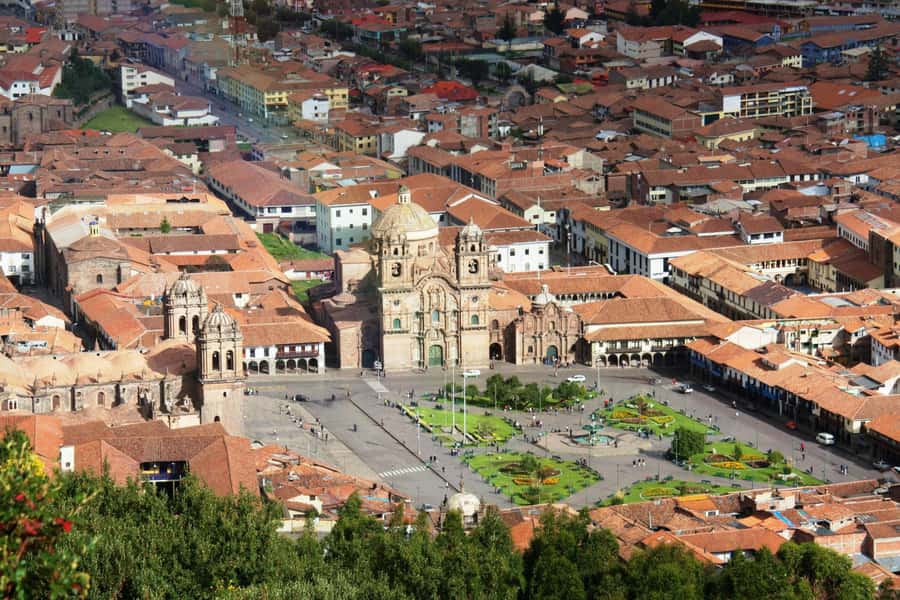
REVIEW · WALKING TOURS
Cusco: Cultural Walking Tour with Local Guide⭐⭐⭐⭐⭐
Cusco walks like a living textbook, and this tour keeps it practical with a local guide and a tight route through Qoricancha and top viewpoints; the downside is it is still a real walk, so it’s not a match for wheelchair users or anyone over 70. I like that you are not just ticking sights off a list—you get context as you move through Cusco’s Inca and colonial streets.
You meet at the main square near the Inca fountain, then spend 138 minutes threading from key sights to the viewpoints. The guide works in Spanish and English, so you can ask questions along the way instead of nodding politely at plaques.
At the stated $1.20 price, the value is mostly in the guidance: you pay for someone to connect the dots. Add in a stop at a luthier, plus traditional music explained on the ground, and the tour feels like you are learning how Cusco thinks, not just what it has.
In This Review
- Key highlights in a nutshell
- Starting at the main square near the Inca fountain
- Qoricancha: the Inca palace stop that sets the tone
- The 12-angled stone and the Inca-to-colonial street mix
- San Blas: a traditional neighborhood with real character
- Viewpoints: how this tour uses altitude wisely
- Luthier stop and traditional music with instrument explanations
- Price and value: what you’re really paying for
- Who this tour is best for (and who should skip it)
- Guide experience: Ernesto and Nilo as standouts
- Should you book this Cusco cultural walking tour?
- FAQ
- How long is the Cusco cultural walking tour?
- Where does the tour start?
- What’s included in the price?
- Are entrance fees included?
- What languages are offered for the live guide?
- Does the tour include viewpoints?
- Is the tour suitable for wheelchair users?
- Can I cancel for a full refund?
- Is there a pay-later option?
Key highlights in a nutshell
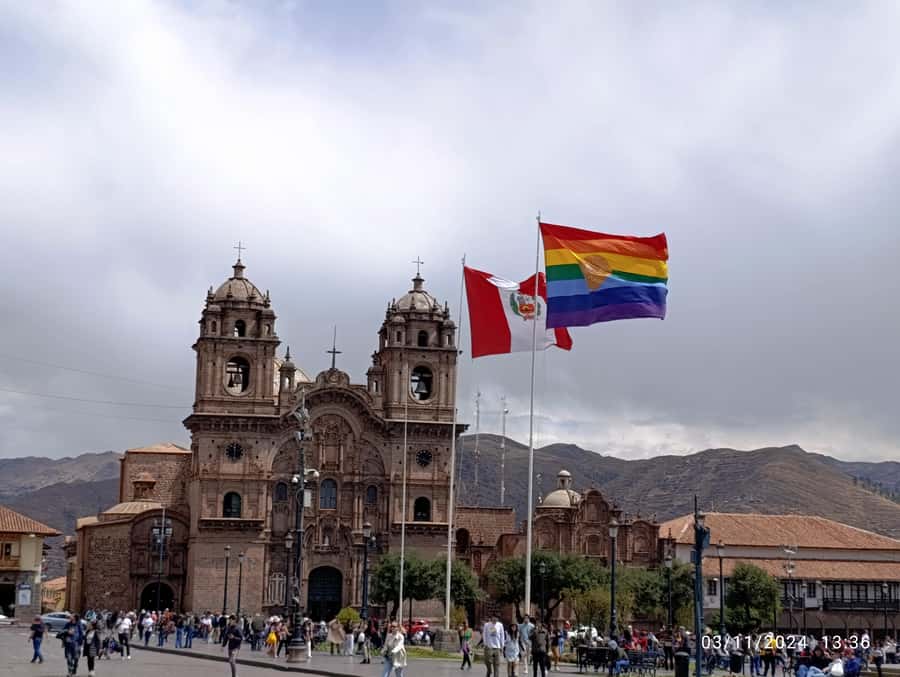
- Main-square start: you begin near the Inca fountain in Cusco’s central plaza, so you can orient fast
- Qoricancha focus: you’ll visit the ancient Inca palace of Qoricancha as one of the first anchors
- 12-angled stone + old streets: you’ll see the famous 12-angled stone and walk through Inca and colonial lanes
- San Blas neighborhood time: you get time in Cusco’s traditional San Blas area
- Viewpoints built into the route: you’re not stuck indoors; the guide takes you to the best viewpoints in town
- Luthier and music: you’ll visit a luthier and enjoy traditional music while instruments are explained
A last few Cusco tours and experiences to fold into the trip
- Cusco: Historic Walking Tour with Pisco Sour and Music Show★ 4.6 · 65 reviews
- Walking Culinary Experience★ 5.0 · 41 reviews
- Cusco: Walking Tour with a Local Guide★ 4.3 · 5 reviews
- Cusco: Cultural Walking Tour with Local Guide⭐⭐⭐⭐⭐★ 5.0 · 4 reviews
Starting at the main square near the Inca fountain
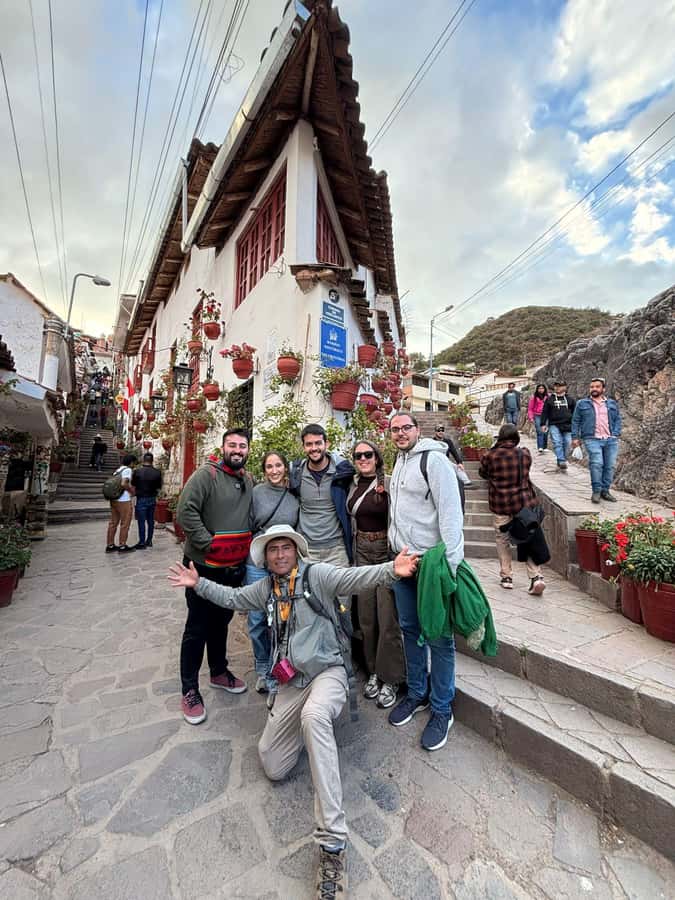
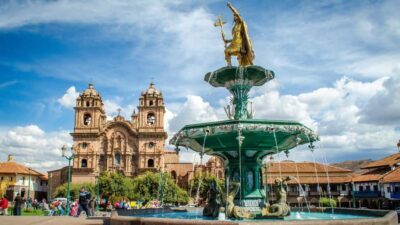
This tour starts where Cusco most people will use as their mental map: the main square (Plaza de Armas), near the Inca fountain. That matters more than it sounds. When the meeting point is central, you waste less time figuring out where you are and more time watching and listening to the guide.
The meeting point can vary a bit depending on the option you book, but it’s still anchored in the same neighborhood. If you want a simple plan, arrive a little early and use the fountain area as your landmark before the group gathers.
Because the tour is 138 minutes, you should think of it as a focused walk, not a casual meander. You’ll be on your feet for the majority of the time, which is also why the activity is listed as not suitable for wheelchair users and people over 70.
Qoricancha: the Inca palace stop that sets the tone
One of the early anchors is the ancient Inca palace of Qoricancha. Even if you have seen Inca sites before, this kind of start is smart: it gives you a base reference for everything else you’ll notice later while walking.
I like the way this stop works in the route design. You get a major Inca reference point at the beginning, then the rest of the tour can help you compare what you see in nearby Inca and colonial streets. Instead of treating each sight as its own postcard, the guide can connect them as part of one city story.
A practical consideration: entrance fees are not included. That means if any portion of Qoricancha access costs money during your visit, you’ll need to cover it separately. If you like to budget tightly, you’ll want to check what applies on the day you go.
The 12-angled stone and the Inca-to-colonial street mix
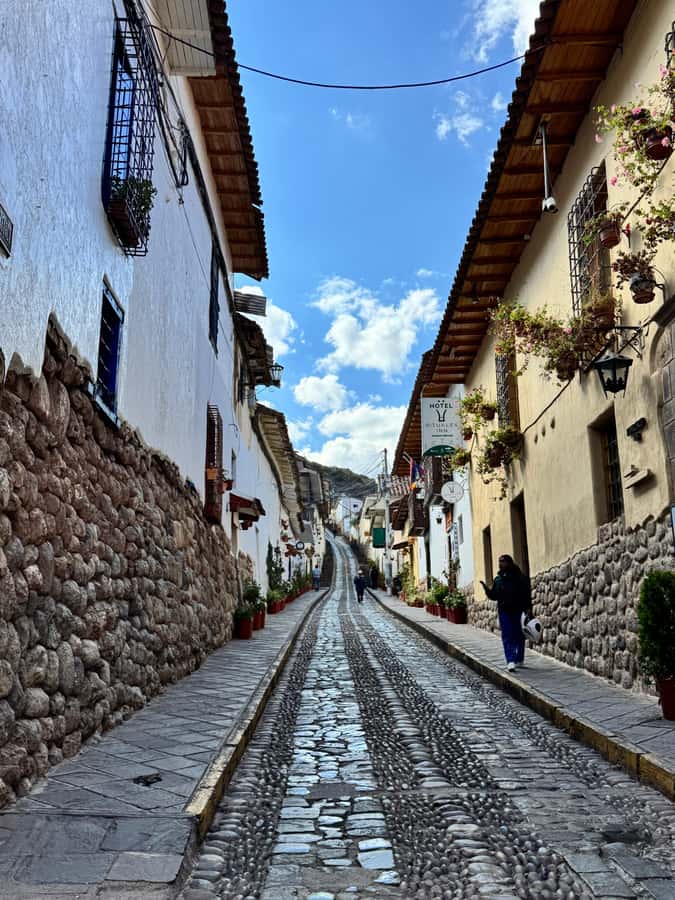
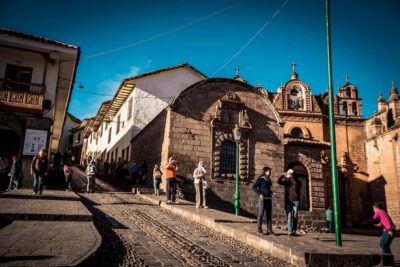
After Qoricancha, the tour continues with Cusco highlights that help you “read” the city as you walk. Two of the named stops are the famous 12-angled stone and a circuit through Inca and colonial streets.
Why does the 12-angled stone matter? It’s the kind of detail your eyes catch once, then keep thinking about later. A guide can point out how the city’s architecture encourages close looking. That’s a good use of time on a walking tour, because you’re not stuck waiting for a vehicle or wasting minutes hunting for the exact angle that makes a photo work.
The Inca and colonial street mix is where Cusco often feels most alive. You’re moving between different eras as part of one stroll, so the city’s layers become visible in real time. The benefit here is that the guide can explain what you’re seeing as it happens, instead of you trying to connect clues later in your hotel room.
San Blas: a traditional neighborhood with real character
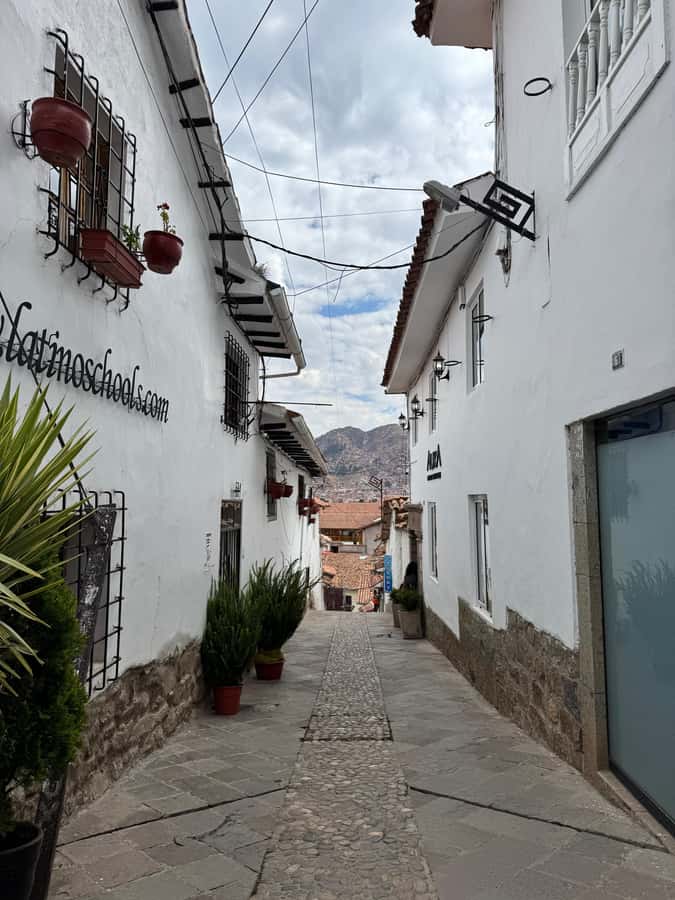
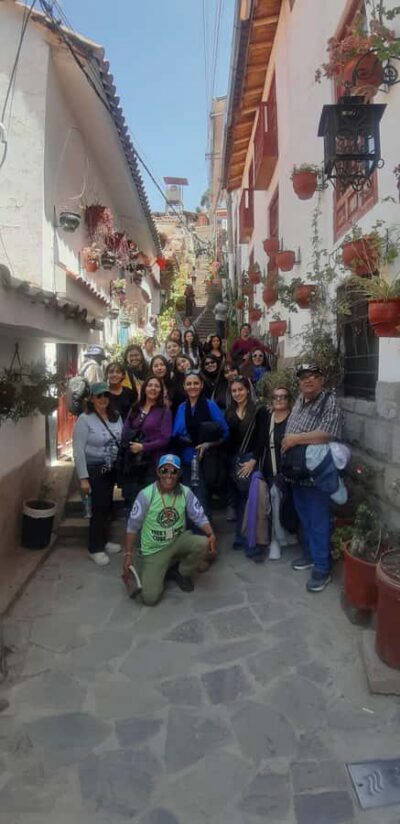
Next you’ll walk through San Blas, described as a traditional neighborhood. This is the part where Cusco starts to feel less like a set of monuments and more like a lived-in place.
San Blas is ideal for a guided walk because it rewards slow attention. Even when a street looks simple on the map, the guide can help you understand why locals value the area and what makes it distinctive compared with the main-square core.
This is also a good section for photos—but not only for photos. I find that the best pictures come when you understand what you’re photographing. With a guide on hand, you’re more likely to notice small details you might skip on your own.
Viewpoints: how this tour uses altitude wisely
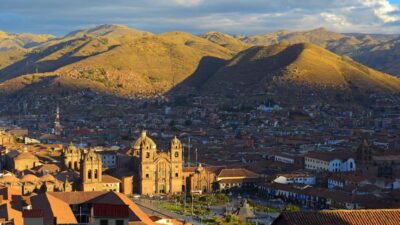
One of the promised highlights is visits to the best viewpoints in the city. That’s not just about getting a nice photo. Viewpoints are useful because they help you place the sights you’ve already seen into a wider mental map.
Cusco’s streets and plazas can be confusing at first. When you pause at a viewpoint, you can reframe your route in your head: where you were, where you’re going, and how the neighborhood edges relate to each other.
The practical flip side: viewpoints mean stops and some uphill or uneven walking. If you have mobility limits, this is the section where you’ll likely feel it. Planning-wise, wear supportive shoes, and don’t treat this as a sightseeing stroll you can do in sandals.
Luthier stop and traditional music with instrument explanations
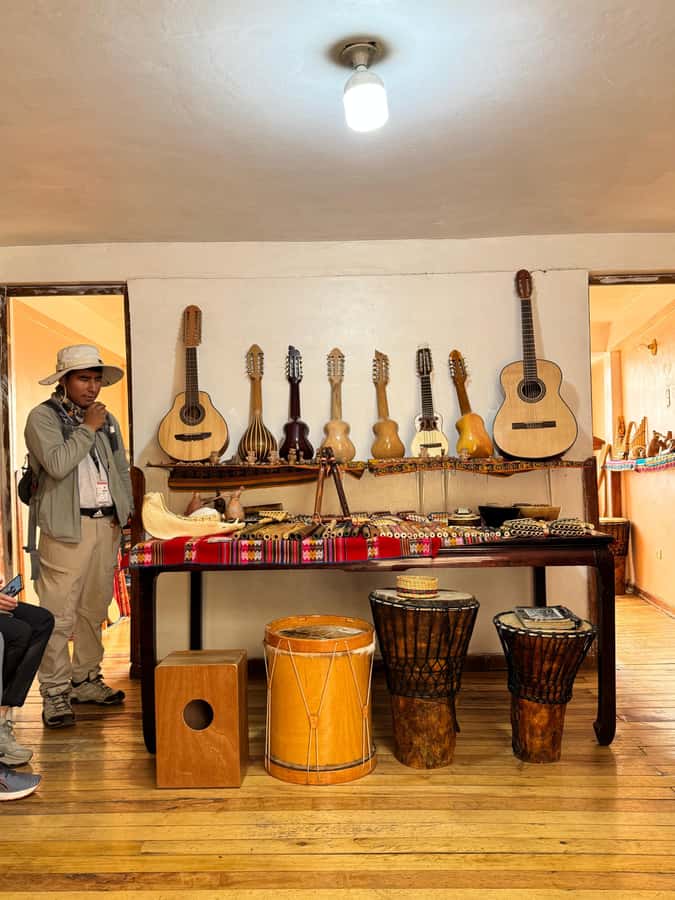
Near the end of the tour, you’ll visit a luthier and enjoy traditional music. The tour guide also explains traditional musical instruments as part of this experience.
This is one of the most valuable parts of the tour if you care about culture beyond big monuments. Instead of just hearing music as background, you’re getting context for what you’re listening to. A luthier visit also signals a hands-on side of Cusco’s cultural life—someone making or working with instruments, not just performing.
I also like this stop because it creates a change of pace. After walking Cusco’s streets and viewpoints, you shift into an environment where you can slow down, listen carefully, and ask questions without constantly looking down to watch your footing.
Note: the tour is described as having content shown in its original language in some parts. Since the guide provides Spanish and English live interpretation, you’ll still have support, but you might occasionally see materials or explanations in their original format.
Price and value: what you’re really paying for
The price is listed at $1.20 per person, for a duration of 138 minutes. Even with that low headline cost, it helps to think about value in categories:
- You are paying for a professional, expert, and friendly tour guide who stays with you for the whole experience
- You’re paying for guided walking access to multiple named Cusco highlights (main square area, Qoricancha, 12-angled stone, San Blas, viewpoints, and a luthier with music)
- You’re not paying for entrance fees, which are explicitly not included
Because entrance fees aren’t included, your real cost on the ground could be a bit higher depending on what’s required for specific stops. Still, the structure is good for budget travelers: you get a guided route across major areas without needing taxis.
One more value note: the group format isn’t described in the details you provided. So if you prefer private pacing, keep that in mind. The good sign is that the tour is tight and structured for a short 138 minutes—often a clue it’s designed to keep everyone moving and informed.
Who this tour is best for (and who should skip it)
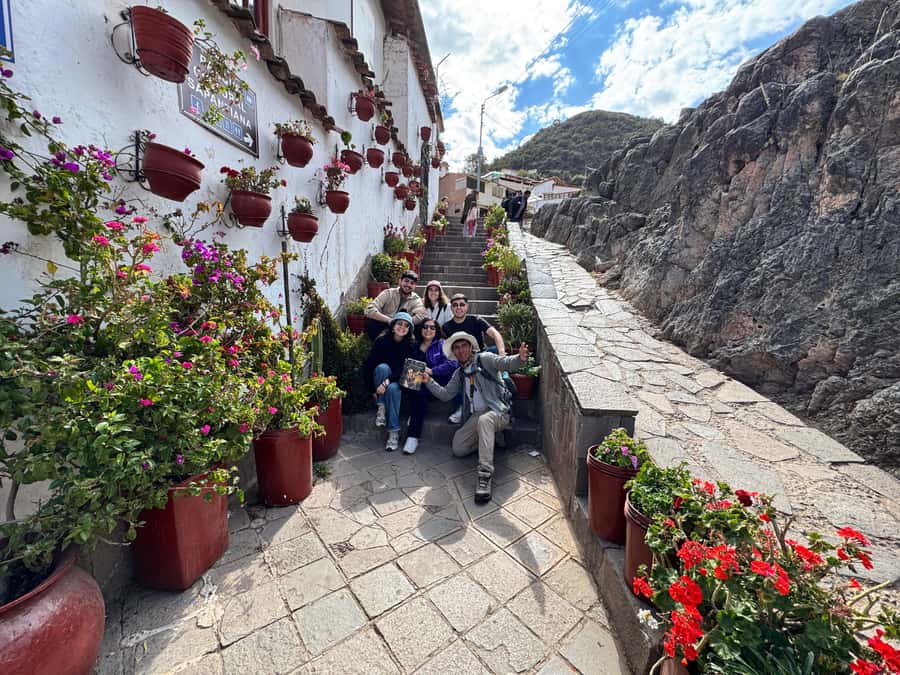
This walking tour is a strong fit if you want Cusco in one organized loop and you appreciate learning from a local guide while you walk. It’s especially good if you like cultural details such as instrument explanations, not just architecture and viewpoints.
It’s not suitable for wheelchair users, and it’s also not for people over 70. If you’re in that range, you’ll probably be happier choosing an option with easier mobility requirements.
If you are the type who enjoys a mix—Inca references (Qoricancha), a famous architectural curiosity (12-angled stone), a traditional neighborhood (San Blas), plus viewpoints and music—this tour matches that exact blend.
Guide experience: Ernesto and Nilo as standouts
The guide experience is a core part of why this tour works. In the supplied feedback, Ernesto is specifically mentioned as excellent, and Nilo is described as fantastic.
Even without naming every guide, that kind of repeated praise matters. It suggests the tour operator (Andean World Explorer) is serious about having guides who can explain clearly and keep the energy up while you’re walking and switching locations.
Should you book this Cusco cultural walking tour?
Book it if you want a compact 138-minute walk that strings together Qoricancha, the 12-angled stone, San Blas, viewpoints, and a luthier with traditional music—and you value a guide to explain what you’re seeing as you go.
Consider skipping or switching plans if you have limited mobility or you’re in the age group listed as not suitable. Also, if you hate the idea of extra costs later, remember that entrance fees are not included, so double-check what you might need to pay on arrival.
If you want a Cusco experience that mixes monuments with cultural listening, this is the kind of guided walk that helps the city make sense fast. And when a tour includes both viewpoints and music explained in real time, you end up with memories that go beyond photos.
FAQ
How long is the Cusco cultural walking tour?
The duration is 138 minutes.
Where does the tour start?
The meeting point is in the main square, near the Inca fountain. The exact meeting point may vary depending on the option booked.
What’s included in the price?
A professional, expert, and friendly tour guide is included.
Are entrance fees included?
No. Entrance fees are not included.
What languages are offered for the live guide?
The live tour guide is available in Spanish and English.
Does the tour include viewpoints?
Yes. The tour includes visits to the best viewpoints in the city.
Is the tour suitable for wheelchair users?
No. It is not suitable for wheelchair users.
Can I cancel for a full refund?
Yes. You can cancel up to 24 hours in advance for a full refund.
Is there a pay-later option?
Yes. You can reserve now and pay later, keeping your travel plans flexible.
More Walking Tours in Cusco



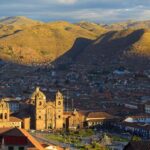
More Tour Reviews in Cusco




Recent write-ups from around Cusco, just off the trail
- Cuzco: Rainbow Mountain Excursion
★ 5.0 · 3 reviews - 1 day excursion to Qeswachaka bridge and the 4 lagoons
★ 3.6 · 3 reviews - Waqrapukara 1 day trekking + meals
★ 3.9 · 3 reviews - Valle Sur Cusco | half day
★ 4.3 · 3 reviews - Full-Day Condor Viewpoint & Inca Sites Tour
★ 5.0 · 3 reviews
Walking Tours, compared.
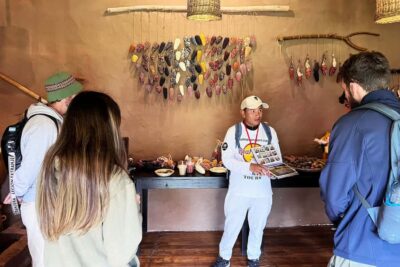 ★ 4.6Historic Walking Tour with Pisco Sour and Music ShowFrom $1065 reviews
 ★ 5.0Walking Culinary ExperienceFrom $7041 reviews
 ★ 3.4Walking Tour CuscoFrom $296 reviews
 ★ 4.3Walking Tour with a Local GuideFrom $155 reviews
 ★ 3.6Best of Cusco: Private Walking Tour with a LocalFrom $203 reviews
 ★ 3.5Rainbow Mountain In Quad Bikes /walk 5 minutes/+mealsFrom $803 reviews
Browse the lists this tour appears in