
REVIEW · CUSCO CITY & SACSAYHUAMAN
Cusco Half Day City Tour: Four Ruins
Four ruins in a tight Cusco circuit. You get Inca-era architecture plus big views, all with a small-group setup that keeps the sites feeling manageable. It is a great way to wrap your head around Cusco’s sacred geography without spending your whole day on buses.
I especially like the bilingual guide approach (English and Spanish) and the simple fact that you hit four different archaeological areas. You’ll also get the kind of walking that helps you connect the dots, from fortress walls to carved temples to a spring-fed “Bath of the Inca.”
One watch-out: the timing can run shorter or start a bit late depending on the group day. Also, there’s some uphill walking and stairs, so if your altitude is still new, plan for a slower pace.
In This Review
- Key highlights to look forward to
- A tight Cusco loop with four ruins worth the effort
- Sacsayhuamán: the zigzag fortress wall and the Cusco skyline
- Q’enqo’s carved temple: the canal mystery and the rock labyrinth
- Puka Pucara: the red-fort terraces and the odd-rock layout
- Tambomachay: the Bath of the Inca and the spring system
- Price and what your money is actually buying
- Timing can be smooth, or slightly chaotic. Here’s how to handle it
- Your guide makes the day: bilingual support that changes everything
- Who should book this Four Ruins tour
- Should you book the Cusco Half Day City Tour: Four Ruins?
- FAQ
- What ruins are included on this Cusco tour?
- How long is the tour?
- What time does the tour start?
- How big is the group?
- Is transportation included?
- Is the guide English-speaking?
- Are entrance tickets included in the price?
- Where does the tour start?
- Does the tour end back at the meeting point?
- Can I cancel for a full refund?
Key highlights to look forward to
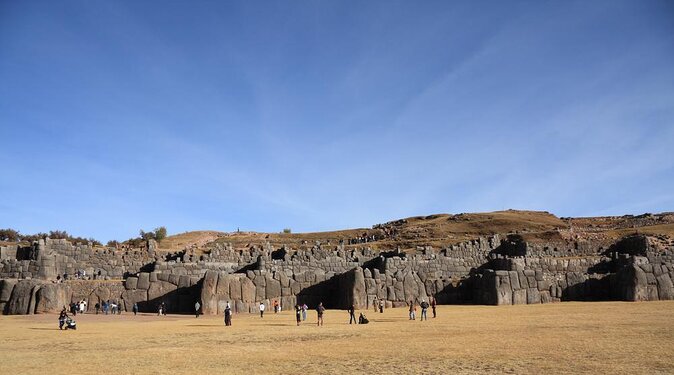
- Sacsayhuamán’s zigzag fortress wall: giant stones and serious Cusco skyline views
- Q’enqo’s monolith-cut temple: a “labyrinth/zig-zag” carved into rock, with a mysterious canal
- Puka Pucara’s red-fort terraces: uneven stones, layered walls, and a rumored tunnel link
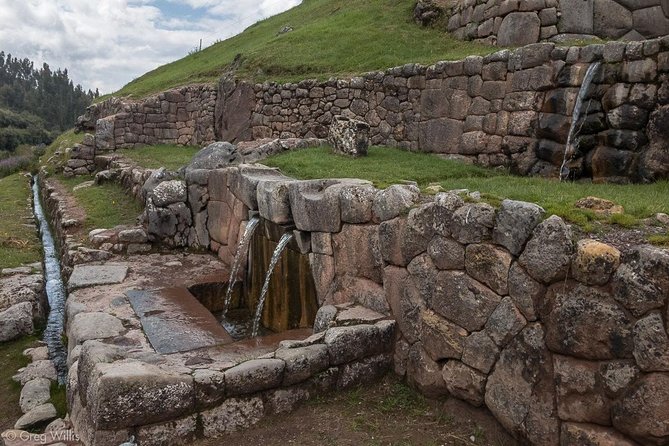
- Tambomachay’s spring-fed terraces: aqueducts, canals, and waterfalls flowing through stepped stonework
- Max 15 travelers: a small group that makes the experience feel less like cattle transport
More Cusco city and Sacsayhuaman walks
- City Tour Cusco Qoricancha Sacsayhuaman y Tambomachay★ 4.7 · 617 reviews
- Cusco: Sightseeing Tour of the City on an Open-Top Bus★ 4.0 · 481 reviews
- Open Bus Cusco City Tour★ 4.5 · 219 reviews
- Cusco: City Tour | Half-Day Tour to 4 Archaeological Sites★ 4.6 · 206 reviews
A tight Cusco loop with four ruins worth the effort
This half-day tour is built for people who want real Inca history around Cusco, but still want energy left for dinner, a market stop, or a quick museum visit. You’re paying for interpretation plus transport, not just a drive-by photo stop, and that matters because these sites can feel confusing on your own.
The schedule is organized around four different complexes outside the city core: Sacsayhuamán, Q’enqo, Puka Pucara, and Tambomachay. Each stop gets its own block of time (about 1 hour for the first three, then about 45 minutes at Tambomachay), with guided context built in.
One reason this tour tends to score well: it is small. With a maximum of 15 people, you spend less time waiting and more time actually looking closely at stonework, layouts, and the way the Incas shaped the land.
Sacsayhuamán: the zigzag fortress wall and the Cusco skyline
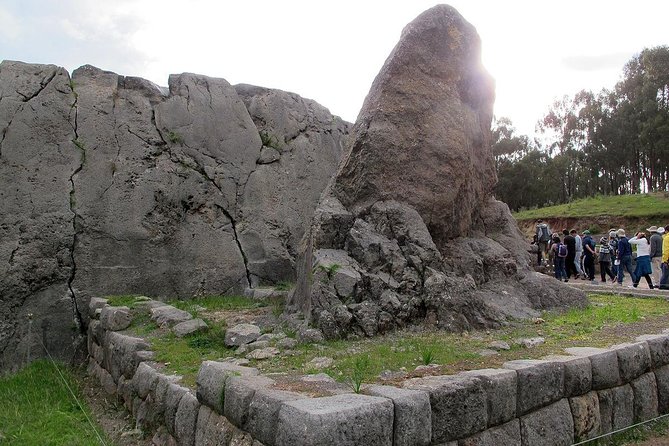
Sacsayhuamán is the first big “wow” stop, and it earns it fast. Even the name is a story: in Quechua, it’s commonly explained as a place where the hawk is satiated. The site itself sits in a debate zone—fortress, ceremonial center, or both—because the design includes features that look military and sacred at the same time.
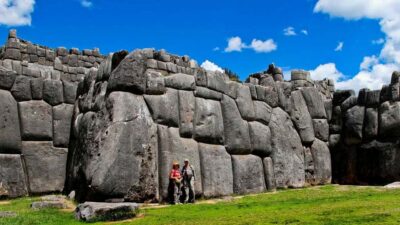
What I find most impressive is the architecture. The main wall is famous for its zigzag pattern, built with giant stones reported up to about 5 meters high and 2.5 meters wide, weighing roughly 90 to 125 tons. That’s not just big-stone bragging. It’s a clue to how engineered the place was, and how carefully the Incas matched their stonework to the landscape.
Your guide also helps you look beyond the wall. Sacsayhuamán is described as having sacred buildings that include residential structures, towers, shrines, warehouses, roads, and aqueducts. That combination is why the site’s overall harmony is often compared to other sacred Inca places like Machu Picchu.
Then there’s the view. On a clear day, you can see mountain summits that were considered sacred to the Incas, including Ausangate, Pachatusán, and Cinca. If you’ve come to Cusco wanting the spiritual map—not just the ruins—Sacsayhuamán is the place where it starts clicking.
Practical note: this is a site with walking and uneven ground. If you are still adjusting to altitude, take your time on the uphill bits and let the group breathe before you force a fast pace.
Q’enqo’s carved temple: the canal mystery and the rock labyrinth
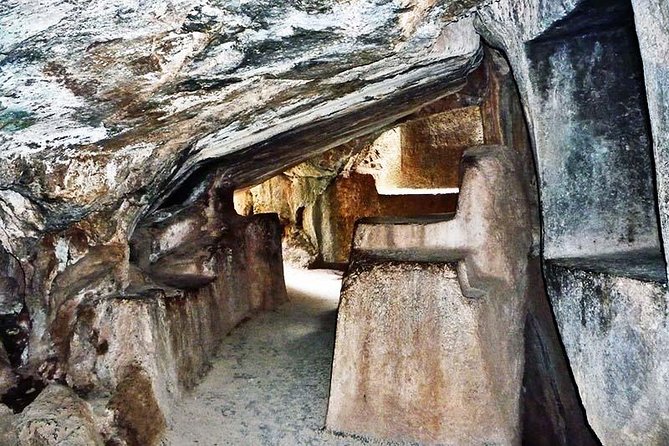
Q’enqo is the “how did they do this?” stop. The name is tied to the feeling of the site: in Quechua, Q’enqo is explained as labyrinth or zig-zag. The reason is physical—there’s a crooked canal cut into the rock—and the whole area reads like a carved maze.
Here’s the fun part you’ll hear from your guide: the canal’s job is not definitively known. Since researchers can’t read the purpose directly from the stone, theories fill the gap—everything from holy water to chicha (corn beer) to blood. Each theory points toward ritual use, including death-related ceremonies or ways to interpret life and destiny through what flowed and how it moved.
Construction-wise, Q’enqo is unique because it’s carved out of a giant monolith. It blends natural chambers with tunnels shaped by human hands, stretched across a hillside so the architecture and the terrain work as one system.
If you like details, look for the chamber with 19 small niches and the amphitheater-like setup. The original function has been lost, but most explanations connect the space to sacrifice or offerings to celestial deities such as the sun, moon, and stars. In other words: it’s not random carving. It is ritual design language, even if we can’t fully translate the final chapter.
Time here is about an hour. That’s enough to feel the layout with your own eyes, and to understand what the guide thinks each feature likely meant.
Puka Pucara: the red-fort terraces and the odd-rock layout
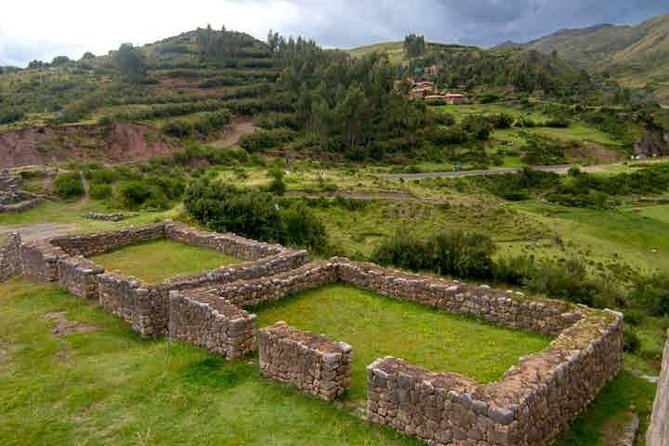
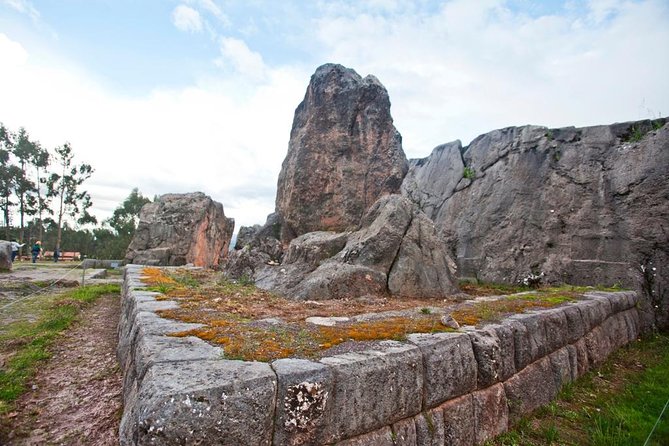
Puka Pucara sounds simple—red fort—but it’s anything but plain. The name points to the site setting and earth tone, explained as red due to the location and the earth color. The complex includes semi-circular enclosure elements and uses stonework in sizes that can look more irregular than at some other Inca sites.
What I like about Puka Pucara is the way it demonstrates engineering without looking flashy. Instead of perfectly uniform blocks, you see rocks of different sizes and a surface that can feel notably uneven. That matters, because it shows a different side of how the Incas built: adaptation to what’s already there, and careful work to avoid wasted motion.
The layout is described in “levels” created by three walls. The first wall includes a sinuous path that carefully avoids protruding rocks. That kind of detail is a quiet reminder that these places were built to fit the ground, not bully it into submission.
You’ll also hear about a network idea: Puka Pucara appears connected to the broader Inca road system known as Qhapaq Ñan. The site description includes enclosures, canals, aqueducts, baths, and a well-known ancient road.
And then there’s the “maybe” rumor your guide might mention: a chincana, or tunnel, rumored to act as a communication channel between Puca Pucara and Tambomachay. Even without proof, it adds to the sense that these sites were parts of a connected living system, not isolated monuments.
This stop is about an hour, which can feel short if you enjoy slow looking. If your altitude is heavy that day, this one is still worth it, but pace yourself on the uneven terrain.
A last few Cusco tours and experiences to fold into the trip
Tambomachay: the Bath of the Inca and the spring system
Tambomachay is a different mood from the other stops. It’s more tranquil, and the constant water gives the place an almost soothing rhythm after the fortress-and-temple intensity of the earlier sites.
The site sits just outside Cusco, about four miles north, at roughly 12,150 feet (3,700 meters). That altitude isn’t just a number. It shapes how you’ll feel during the walk between terraces, so plan for short pauses.
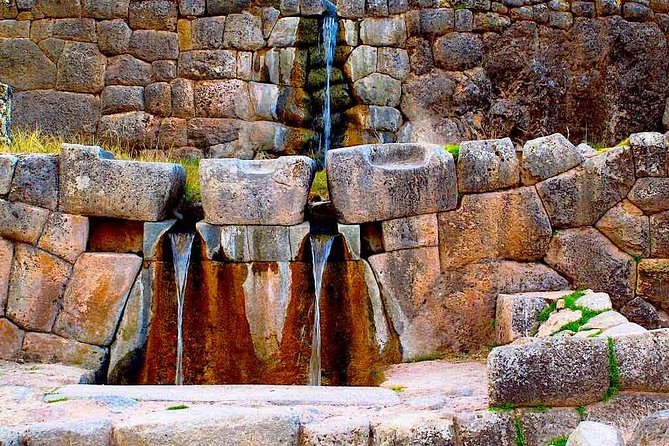
Tambomachay consists of three stepped terraces of precise Inca stonework, with trapezoidal niches built into some retaining walls. Water drives the whole show: the complex is built over, or into, a natural spring that continuously feeds aqueducts, canals, and waterfalls across the terraces.
You’ll hear it called El Baño del Inca, the Bath of the Inca. The common theory is that it functioned as a spa or bathing area for the Inca ruler—and possibly for higher-status guests too. But the honest approach is that its exact purpose is not pinned down. It might have been ceremonial, spa-like, military in function, or a mix of roles.
The key for you is what to do with that uncertainty. Use it as a lens: when you watch the water channels, it’s easy to see why bathing would make sense. And when you look at the stepped stone terraces, it becomes clear why ceremonial use could be layered on top.
Time here is about 45 minutes. That’s usually enough to see the terraces, understand the spring-fed system, and still catch your breath (literally) before heading back.
Price and what your money is actually buying
At $45 per person, this tour is priced like a value-focused half-day. You’re not only paying for the sights—you’re paying for transport and a bilingual guide (English and Spanish). The small-group size (max 15) helps too, because you’re less likely to get stuck behind the slowest walker in a big crowd.
Two entrance-related costs are listed separately:
- Qorikancha entrance: PEN 20.00 per person (listed as not included)
- Entrance to sites: PEN 70.00 per person
Important practical point: your exact total will depend on what your day includes. Since the Qorikancha fee is listed but not shown in the four-stop sequence of Sacsayhuamán, Q’enqo, Puka Pucara, and Tambomachay, I’d confirm with the operator before you pay onsite. You want to avoid the classic Cusco surprise of paying twice.
If you’re budgeting, think of the $45 as the guided transport package, then add the site entrance fee line items. That makes the math simple.
Timing can be smooth, or slightly chaotic. Here’s how to handle it
The tour runs on a 10:00 am start and returns you to the meeting point. The advertised total time is around 6 hours, which lines up with a half-day format with multiple stops.
But real-world days can vary. One account says pickup ran late by about 35 minutes and the day felt rushed, with the tour lasting closer to 4 hours. Another account praised the timing as well-managed and smooth. That spread tells you to go in with a flexible mindset.
Comfort is another mixed note. The van is described as nice, but seats can be full. If you’re tall or need space to breathe at altitude, arrive a few minutes early to reduce stress, and choose your spot in the van wisely once you’re onboard.
Also, there may be an extra stop that isn’t always on the main four-ruins plan, like an alpaca wool shop where materials get explained. That can be a pleasant break, but if you hate shopping detours, ask your guide up front whether there’s an additional stop that day.
Your guide makes the day: bilingual support that changes everything
The tour is led by a bilingual guide in English and Spanish, and that makes a big difference in how much you get out of the ruins. When the guide clearly communicates, you don’t just see stone—you understand why it mattered.
Two guide names came up in people’s experiences: Edith and Freddy. One person credited Freddy as the highlight of the trip and appreciated how he communicated in English while also giving personal recommendations. Another person mentioned Edith as very knowledgeable and considerate, with clear English and Spanish delivered smoothly.
There’s also a caution to keep in mind: one experience included some early confusion tied to group coordination and a language gap before the guide fully took over. The lesson for you is simple—once the guide is in charge, listen closely and ask questions immediately rather than waiting for perfect timing.
If altitude affects you, your guide may help set expectations. One account notes the guide did not pressure people to walk faster or climb stairs if they weren’t ready. That’s a good sign for your comfort level.
Who should book this Four Ruins tour
This tour fits best if you:
- Want an organized overview of major Inca-era sites around Cusco without building your own route
- Like learning as you walk, not just taking photos
- Prefer a small group (max 15) for easier flow between stops
- Are visiting in a shorter window and need a high-impact half-day
It’s also a solid starter tour if you’re new to Cusco. The four stops cover fortress design, ritual temple ideas, engineered terraces, and a spring-fed water complex—so you start to see how Incas shaped both politics and daily life.
Who should think twice? If you want long free time to wander each ruin independently, the timed stops may feel tight. And if you know you struggle at altitude, go slower than the group at the stairs and uphill sections.
Should you book the Cusco Half Day City Tour: Four Ruins?
If you want a value-forward guided loop that hits four meaningful sites—without a huge group—this is an easy yes. The combination of transport + bilingual interpretation + small group size is the core reason it works, especially for first-time Cusco visitors.
I’d book it if you’re okay with some walking and you can handle altitude at your own pace. Bring patience for timing variability, and confirm entrance fees so the day doesn’t get financially messy at the last minute.
If you’re the type who needs lots of solo time at each ruin, or you hate any schedule pressure, then you might prefer a longer private plan. But for most people, a guided four-ruins half-day is a smart use of Cusco time.
FAQ
What ruins are included on this Cusco tour?
You’ll visit Sacsayhuamán, Q’enqo, Puka Pucara, and Tambomachay.
How long is the tour?
The duration is listed as about 6 hours.
What time does the tour start?
The start time is 10:00 am.
How big is the group?
The tour has a maximum of 15 travelers.
Is transportation included?
Yes. Transport is included.
Is the guide English-speaking?
The guide is bilingual, offering English and Spanish.
Are entrance tickets included in the price?
No. Entrance to Qorikancha is listed as PEN 20.00 per person, and entrance to sites is listed as PEN 70.00 per person.
Where does the tour start?
The meeting point is HEIDI TRAVEL EIRLC. Plateros 324, Cusco 08000, Peru.
Does the tour end back at the meeting point?
Yes. It ends back at the meeting point.
Can I cancel for a full refund?
Yes. Free cancellation is available up to 24 hours in advance for a full refund. If you cancel less than 24 hours before, the amount paid is not refunded.
More City Tours in Cusco
More Tour Reviews in Cusco

More of Cusco on Foot
Recent write-ups from around Cusco, just off the trail
- Cuzco: Rainbow Mountain Excursion
★ 5.0 · 3 reviews - 1 day excursion to Qeswachaka bridge and the 4 lagoons
★ 3.6 · 3 reviews - Waqrapukara 1 day trekking + meals
★ 3.9 · 3 reviews - Valle Sur Cusco | half day
★ 4.3 · 3 reviews - Full-Day Condor Viewpoint & Inca Sites Tour
★ 5.0 · 3 reviews
Cusco City & Sacsayhuaman, compared.
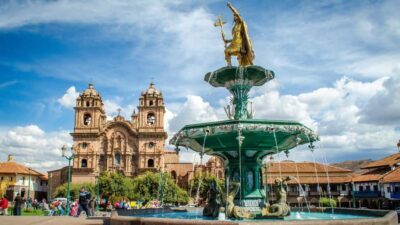 ★ 4.6Half-Day City Tour with Sacsayhuaman and Q’encoFrom $131,129 reviews
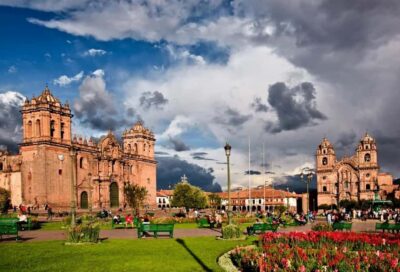 ★ 4.7City Tour Cusco Qoricancha Sacsayhuaman y TambomachayFrom $13617 reviews
 ★ 4.0Sightseeing Tour of the City on an Open-Top BusFrom $12481 reviews
 ★ 4.5Open Bus Cusco City TourFrom $14219 reviews
 ★ 4.6City Tour | Half-Day Tour to 4 Archaeological SitesFrom $29206 reviews
 ★ 5.0City Tour in Cusco & visit Museum South American Camelid Private.From $49147 reviews
 ★ 4.5Cusco City Sightseeing, San Pedro Market, Cathedral and Qorikancha TempleFrom $59139 reviews
 ★ 4.2Half-Day City TourFrom $17129 reviews
Browse the lists this tour appears in